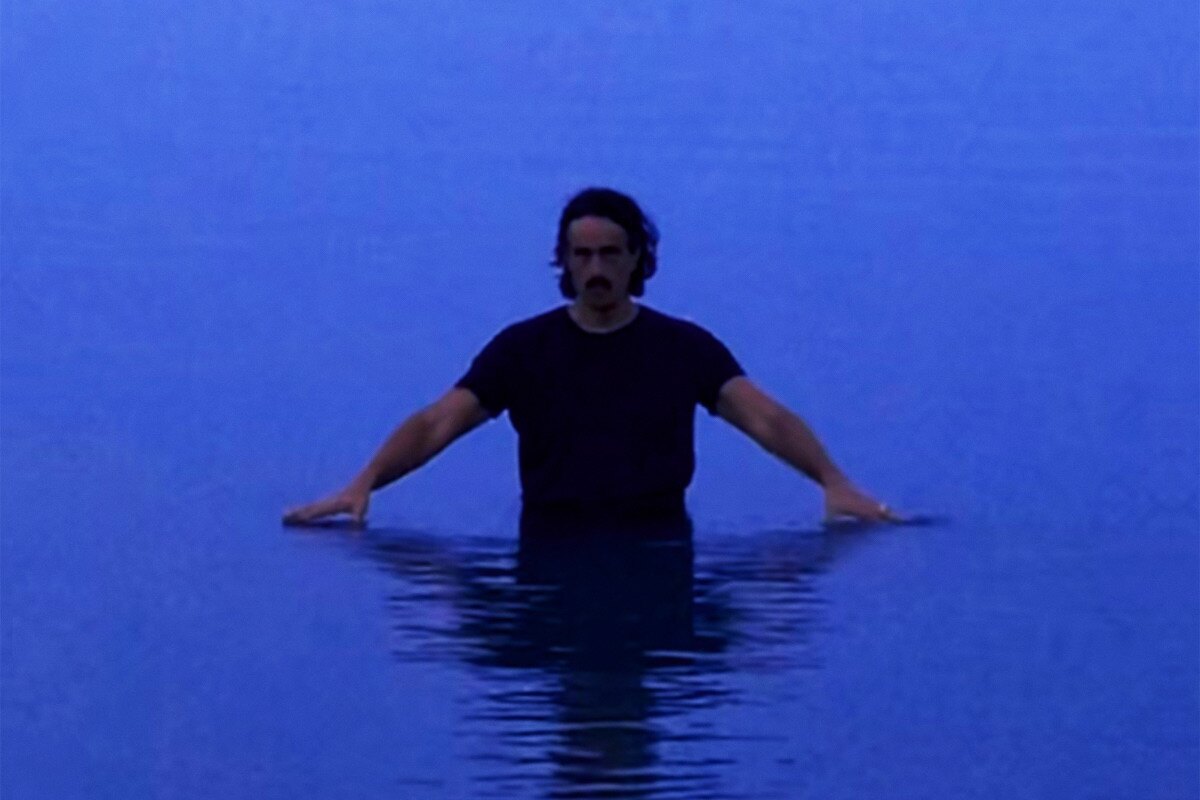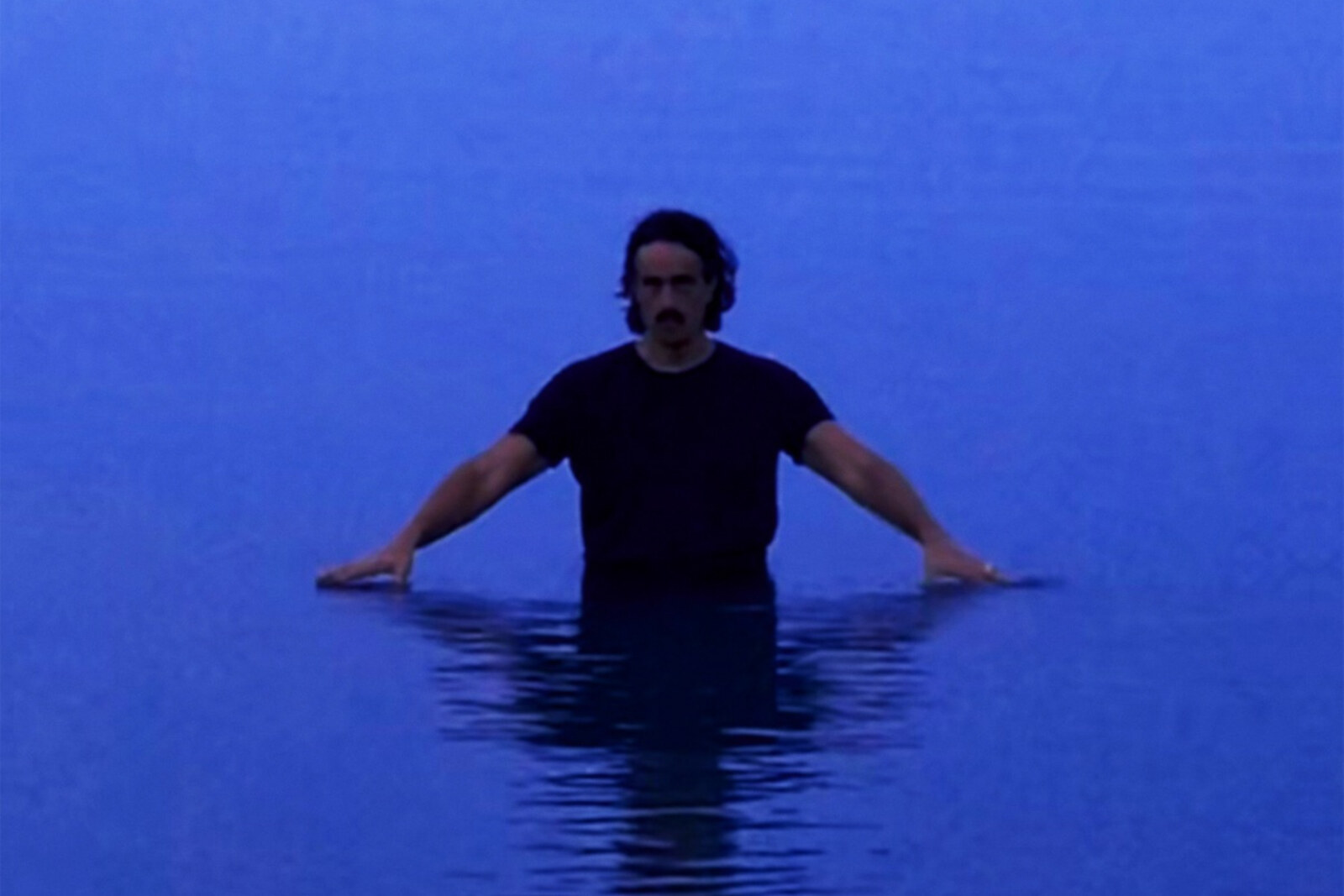
Daniel Benyamin releases Life After Music
When Daniel Benyamin writes music, it’s never just about crafting beautiful songs. There is always a broader idea at play—an overarching concept, a perspective through which he reflects on certain aspects of life. With his second solo album, however, he moves beyond isolated themes and turns his attention to life as a whole: life after music.
A small studio perched on a cliff at the foot of Mount Olympus. Perfect solitude. Only in the far distance is there a faint trace of life. Is this what absolute silence sounds like? “Dolphin Palace” is the name of the place where Life After Music came into being.
The result is Life After Music, a double album divided into four thematic sides which will be released on May 15, 2026 via Ghost Palace Records/Cargo. It explores loneliness and space, life and silence, each thematic making the title of each side of the vinyl. Musically and conceptually, it asks whether the end of silence might also signal the end of music. Can the beauty that once captivated us still exist amid the relentless “white noise” of endless playlists and AI-generated tracks? Or has music itself—reduced to background sound—become the adversary of peace and inspiration?
While the exploitative practices of streaming platforms are increasingly evident, the issue runs deeper. In the name of “changing listening habits,” we have become part of the system we criticize. Where once there was pride in discovering unknown artists, today the streaming “play” button floods us with generic, interchangeable songs—music that demands nothing and changes nothing, whether we truly listen or not. Songs that once shaped identity and defined belonging have largely lost their cultural weight. There is barely a shared soundtrack for youth anymore.
And art? It adjusts. It conforms. If it is still made by humans at all, it shortens itself to fit the system. Here, Daniel Benyamin raises a pressing question: Have our listening habits evolved—or have we simply forgotten how to listen?
With Life After Music, he places the issue under a magnifying glass. He does not claim to offer solutions. Instead, he proposes an experiment. The album will be released physically only as a complete work, and digitally in several stages—page by page. More questions than answers guide the project, leading to a meditation on vitality and emptiness, loneliness and silence.
Rather than surrendering to conformity, Benyamin opens alternative doors for his audience. He strips away artificiality, emphasizing true craftsmanship and substance—transforming necessity into a soundtrack. For life with, in, and after music.
Perhaps surprisingly, the album begins in an accessible way: concise, catchy, and subtly experimental pop gems—softer than its predecessor Eral Fun, yet vibrant and stylistically diverse. Gradually, however, it begins to dissolve. Colors become more defined, then fade into monochrome. Optimism gives way to melancholy. Grooves drift outward and dissipate. Loudness turns into quiet. Eventually, musicality itself seems to recede—mirroring the very trends the album critiques. Because at its core, Life After Music is about silence and solitude as counterforces to noise. Not pessimism, but a search for hope in stepping away.
The project extends beyond music and lyrics. As part of a larger artistic vision, Daniel Benyamin co-founded the Ghost Palace Artist Society alongside fellow artists—an initiative advocating for universal basic income for creatives. In this way, the album gains a social and even political dimension.
The artwork and accompanying videos were developed in close collaboration with Leipzig-based artist Laura Straubel. “There’s always music playing in my head,” says Benyamin. “In cities, where pre recorded music is everywhere, I find it hard to bear. Volume has never been the issue—sounds inspire me. But much of what we hear today feels more like advertising than music. And that’s exhausting.”
With Life After Music, Daniel Benyamin offers music that invites us to pause—to rediscover depth and space amid the overwhelming flood of mass-produced sound. If we are willing to listen.
From an early age, Daniel Benyamin has felt a strong desire to bridge contrasting musical worlds. He admired the melancholic works of J.S. Bach played in his parents’ living room just as deeply as the obscure new wave bands whose records he had to purchase in secret, since rock music was forbidden in his home. At twelve, he even (accidentally) invented a multi-track cassette recorder, which allowed him to create the music he wasn’t permitted to hear — a personal soundtrack to his sense of isolation.
The former composer, singer, and drummer of Sea Air and Jumbo Jet moves effortlessly between extremes: his new album is both opulent and stripped-back, as hook-driven as it is atmospheric, and reflects the influence of his recent work in dance and film soundtracks.
He is currently touring the album alongside American folk artist Simone White. Together, they seek to spotlight problematic live music policies at many venues by performing in unconventional spaces where promoters share their vision of fair and sustainable concerts.
Since leaving school and home at seventeen, Daniel Benyamin has toured extensively, composed, and explored countless creative projects, performing more than 2,000 concerts across 35 countries. Throughout his career as a musician, he has also collaborated with artists such as Sufjan Stevens, Whitney Houston, and Wim Wenders, among others and after selling tens of thousands of records and releasing over one hundred songs and compositions, he embarked on a new chapter as a solo artist in 2022.
His greatest achievement lies in the authenticity of his work. Detached from mainstream expectations, he follows his inner musical calling, revealing both vulnerability and his distinctive, expansive songwriting—marked by driving rhythms and atmospheric, infectious melodies. Blending analog instruments with vibrant synth textures, Daniel Benyamin has created a unique sonic universe he calls “Ghost Pop.”
Watch the music video for "Holding Hands"
Watch video
Embedded content from a social media network that wants to write or read cookies (YouTube). You have not given consent for this.
Read more
All articles →