Delilah Holliday announces new album "Fat Cat" out 28 August
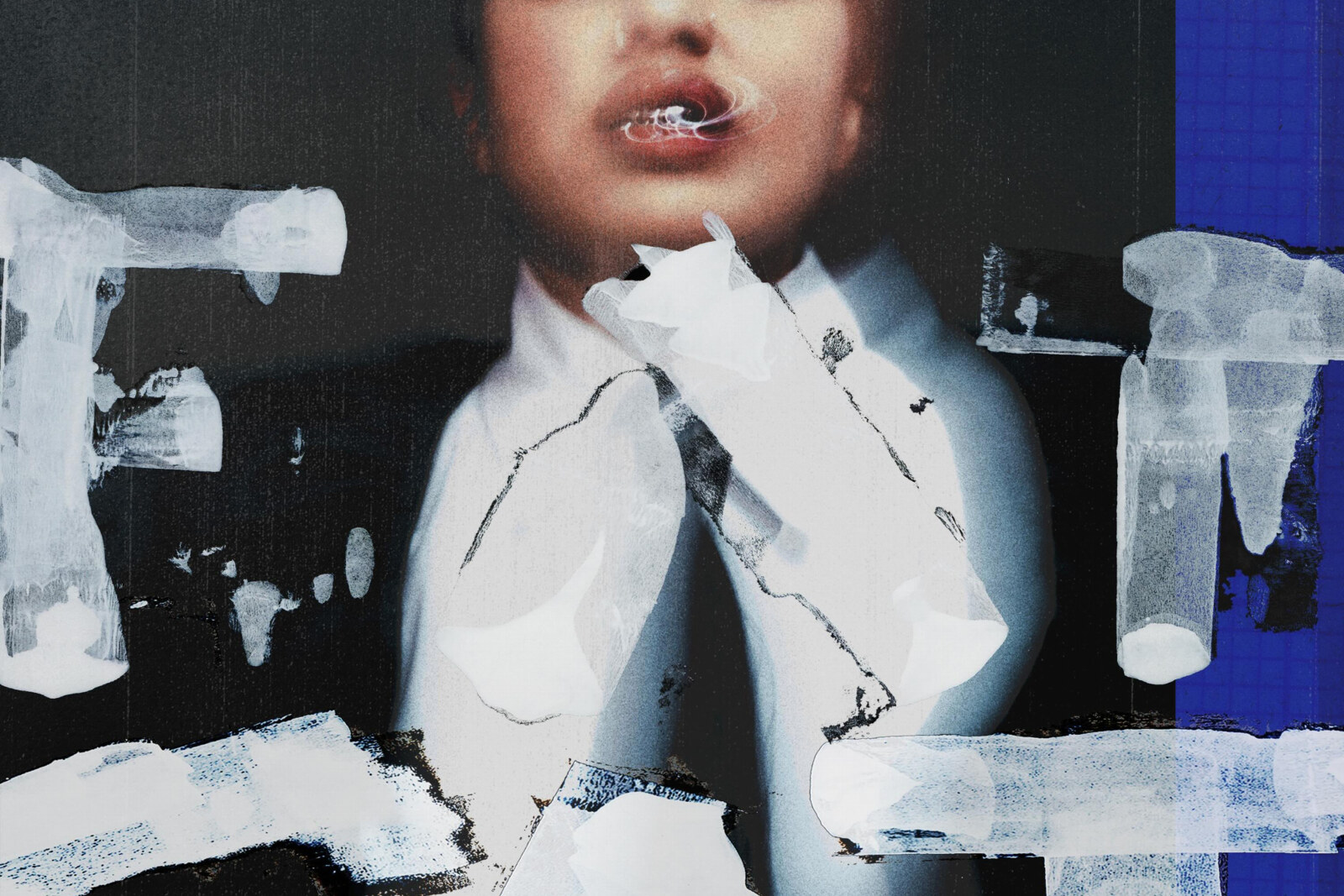
Delilah Holliday returns with her most ambitious and unflinching body of work to date. ‘Fat Cat’, her debut album, released August 28th via One Little Independent Records, is a new wave recession-pop concept record that interrogates grief, systemic inequality, and spiritual survival under late-stage capitalism. The announcement comes alongside new single ‘Formless’.
Marking a significant moment in her evolution as an artist, ‘Fat Cat’ sees Delilah pushing her sound further without ever sacrificing the experimental, DIY edge and emotional depth that has defined her creatively her entire life, from her time in punk breakouts Skinny Girl Diet to her critically acclaimed 2023 ‘Invaluable’ mixtape.
‘Fat Cat’ was written during a period of profound grief. It exists at the intersection of intense lived trauma and political awareness. Delilah describes a sequence of loss that unfolded within a very short space of time. Much of the record was conceived while she was pregnant, navigating illness and instability. During this period, she experienced the death of her uncle Simon, whose guidance and mentorship were instrumental in shaping her both personally and artistically. She says that she would not be a musician without him. Within months, she then lost her Nana (“never “Grandma,” as she would insist”), a formidable matriarch on her maternal side who emigrated to the UK from St. Elizabeth Parish, Jamaica, during the Windrush generation.
Just one month later, she experienced the loss of her child. These events sit at the emotional core of the album, undeniably impacting its meaning and deeper philosophy. She admits that at times it has been hard to listen back.
“Before last year, I thought I understood grief through empathy, but I had never truly experienced its full emotional weight,” she explains. “I had endured loss before, but nothing prepared me for the devastation of losing multiple foundational figures in my family within such a short period.
It shattered me. Without my support network, I truly do not know if I would still be here. Living with chronic mental illness already requires daily endurance, and this level of pain pushed me to my absolute limit. Rather than allowing grief to destroy me, I transmuted that pain into Fat Cat.
It’s semi-autobiographical, it critiques modern society and the capitalist institutions we did not create yet are forced to navigate simply by being born into them,” she says. “I wanted to transform my personal tragedy into a social commentary, using individual pain to examine collective struggle and inequality, as well as the search for faith, meaning, and survival.”
Sonically, the album builds on the dreamlike, transportive qualities of her earlier work while pushing into a more refined pop framework. Downtempo electronics, trip-hop textures, and fractured hyper-pop drift between states of disorientation and clarity, balancing accessibility with antagonism. Collaboration plays a key role here; Raphael Ninot (Raph) emerges as a central creative partner, bringing an intensely personal level of commitment to producing the project, while Liam Howe (of Sneaker Pimps) elevated it while retaining its contemporary sound.
The title track and opener ‘Fat Cat’ sets the tone for the album’s political core amidst a flurry of wild breakbeats. The “fat cat” becomes a symbol of unchecked wealth and exploitation, while the repeated line “I know God’s got a plan” sits in deliberate ambiguity, somewhere between faith and resistance. “Your personal suffering exists within a larger, unjust system,” she says. “I wanted to create something relatable that highlights the frustrations I have with society in a way others can connect to.”
The album’s emotional crux lies in ‘Loop 7’, a hypnotic but raw meditation on the patterns of grief and mental health. Repetition here is not just a stylistic choice but a reflection of lived experience, the inescapable loops of memory and longing. “It reflects cycles of grief, therapy, and intrusive memory,” Delilah explains. “Being stuck in an emotional loop you can’t escape.”
On ‘Formless’, you get the sense of complete identity collapse. It crystallises the album’s journey from complete loss of control, to coming to terms with loss, and towards spiritual awakening. Built around the paradoxical refrain “I’m everything and I’m nothing at all,” it captures the destabilising effect these things have on the self, the ego death. The production feels deliberately weightless and untethered, as though consciousness itself is dissolving in the static of analogue decay. It is, as Delilah frames it, “a sonic state of psychological and spiritual disintegration, introducing the inability to control external power structures versus the internal need to find meaning.”
From here, tracks like ‘Dream In Colour’ and ‘Odyssey’ begin the slow process of reconstruction. On multiple occasions, we’re met with mantra-like lyrical chants of catharsis. Healing through repetition. “If your spirit is broken, I’ll fix it.” ‘Odyssey’ reframes survival as a journey back to self, not through resistance but surrender. “It marks a return ‘home’ after fragmentation.”
That tension between the personal and the structural comes into sharper focus on ‘This Is’, where relational conflict becomes inseparable from systemic influence. It positions heartbreak within a broader framework of social conditioning, while flashes of defiance hint at the rebuilding of identity through pain. “Even intimacy is shaped by external forces”, she says.
Elsewhere, the album moves fluidly between emotional intensity and moments of relief. ‘Free State’ directly confronts the current political climate, war, violence, and global instability, while ‘Love Bite’ offers a moment of almost euphoric levity, a reminder that not everything has to carry the same weight. Closing track ‘Skyline’ acts as a summation of the album’s arc, distilling its themes of endurance, perspective, and hope.
Disintegration, reflection, through conflict and grief, ultimately ending with spiritual surrender.
Alongside these themes runs a stark reflection of the realities facing artists today. During the making of ‘Fat Cat’, Delilah experienced periods of housing insecurity, living in temporary accommodation while continuing to create. That instability becomes inseparable from the album’s capitalist critique.
As of 2026, people from working-class backgrounds make up just 16% of those in creative occupations in the UK. 98% of musicians said they were concerned about rising costs affecting their career, and half feared they may be forced to leave the industry because of this. According to Help Musicians, nearly a quarter (23%) of musicians stated they do not earn enough to support themselves or their families and, for nearly half (44%), a lack of sustainable income is a barrier to their music career. 17% of musicians also reported being in debt, rising to 30% amongst those with a mental health condition and 28% for Black/Black British musicians.
“This capitalist reality is the backbone of the album,” she notes. “Not being able to pay rent, not having job security, but still being grateful to make music through it all.”
The video shoot for ‘Formless’, filmed with her sister in Marrakesh, was deliberately stripped back, as Delilah returns to the scale of her DIY beginnings, with a smaller team and budget, allowing the natural landscape of the Sahara Desert to speak for itself. In fact, throughout the album process, Delilah and her sister have continued presenting the monthly NTS Radio show they’ve had together since 2016, maintaining one foot in the grassroots scene that has provided Delilah with a grounding space.
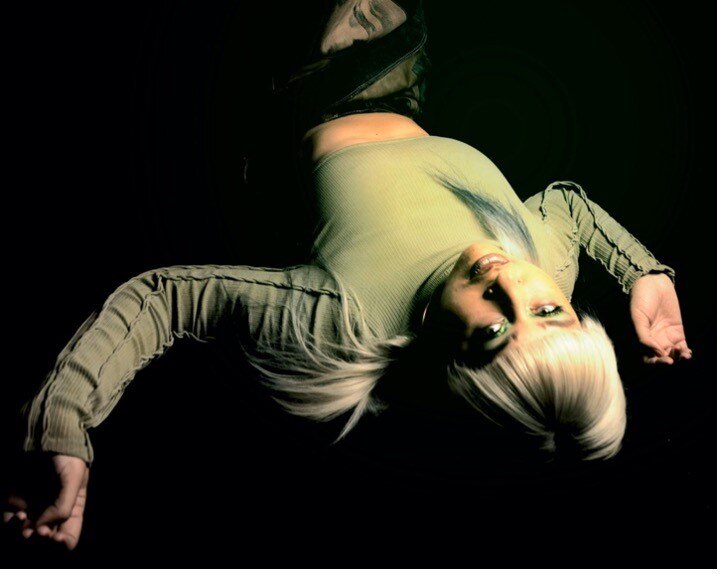
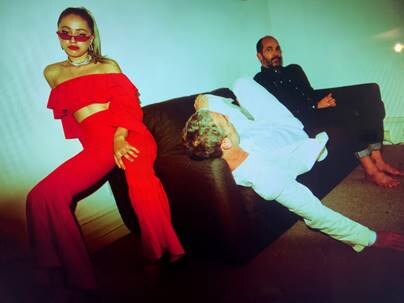
The world of ‘Fat Cat’ extends beyond the music into a carefully constructed visual world. Known for creating characters around each release, the artwork and accompanying photography draw on imagery of wealth and excess, referencing aspirational American hip-hop iconography through grills and stylised opulence. But beneath this surface lies a critical question; “Are you brave enough to boycott the American Dream?”
Ultimately, ‘Fat Cat’ is a record about resilience. “In the darkness, I turned to the Divine,” Delilah reflects. “I had to place my faith in something greater than myself because I needed a reason to survive.”
With ‘Fat Cat’, Delilah Holliday transforms lived experience into a record that holds a very intimate kind of grief and wider inequalities in the same frame. Rather than treating these as separate threads, the album allows them to coexist - personal loss unfolding alongside an awareness of the structures that shape and constrain everyday life for working people, each fighting their own battles daily. The result is a debut album that feels lived-through, fought-through, tooth and nail. It is fully formed, complex, and completely uncompromising in its vision and intent.
Read more
All articles →