"Music Is Invisible (Pentimento Volume Three)", the third part of Jon Hassell’s Pentimento trilogy is set for release October 2
The new album captures Jon Hassell performing as part of a trio with Rick Cox and John von Seggern at St John at Hackney church, London on 23 May 2015, carefully edited and mixed by Jeff Rona into something that is much more than a traditional ‘live album’. Themes, motifs and riffs from Hassell’s two final albums, Listening To Pictures and Seeing Through Sound, occur throughout these unique, semi-improvised mutations, making this a fitting final volume in the late career renaissance of the Pentimento series. It contains a liner note essay by Jon Hassell that inspired the title, and is also available as part of The Pentimento Trilogy boxset.
Before Jon Hassell passed away in June 2021, he released two remarkable and critically adored albums: Listening To Pictures (2018) and Seeing Through Sound (2020), presented as parts one and two of the Pentimento series. ‘Pentimento’ is defined as “the appearance in a painting of earlier images, forms, or strokes that have been changed and painted over”, a methodology that Jon applied in a musical sense throughout his career, refining and developing his approach over time.
Specifically, Hassell would take previous recordings, whether captured audio from a concert he had performed, or snippets of rehearsals, and use it as base material to play fresh parts over, or take certain sections and loop them into a whole new piece, echoing the ‘version’ approach of dub reggae music from Jamaica, filtered through his love of Teo Macero’s radical tape cut-ups of Miles Davis in the 1970s. Examples of this can be seen as early as 1980’s Brian Eno-produced Fourth World Vol. 1 - Possible Musics where material taken from previous album Earthquake Island, and a live concert recording from the Art Gallery Of Ontario, serve as the launchpad for the musicians to play over as a sound bed, and make entirely new pieces out of the resulting parts. This continues right up to final studio album Seeing Through Sound, where recordings of Jon and band in a church in Vienna, or laying down a session for Radio France are edited, overdubbed, or even overlaid with a completely different recording to create a kind of sonic collage.
All of this is to say that whilst Music Is Invisible does capture Jon Hassell and band performing live, the blurred lines between ‘studio’ and ‘live’ in the Hassell discography means that the category distinctions become somewhat meaningless. The musicians here are playing using a sound bed of samples taken from different sources (often their own previous performances), combined with the extensive editing, clean-up work and subtle sampling employed at the mixing and post-production stage, means this is as much a ‘studio’ record as many other entries in the artist’s body of work. The other two ostensibly ‘live’ albums in the rich Hassell discography, The Surgeon Of The Nightsky Restores Dead Things By The Power Of Sound (1987) and The Living City (issued 2023, recorded in 1989). were also created using this sensibility.
Work was well underway on Listening To Pictures (which was originally conceived as a double album before being broken up into two parts) when Hassell visited London in May 2015. It was during this trip that he visited the offices of Warp Records to play them “Dreaming” and other new tracks from the then unfinished album, and plans were hatched with them to form the Ndeya imprint as a home for Jon’s music going forward. Hassell also undertook radio and podcast interviews, delivered a live talk about his book The North And South Of You in South London, and took in a concert at much-loved freeform music space Cafe Oto.
A lot of time, care and effort has been undertaken by everyone involved in Music Is Invisible to make sure that the release has been put together in a spirit which Jon himself would hopefully appreciate. Of course, it is very difficult to second guess the wishes of those no longer with us, and especially so with an artist who was so meticulous in every detail of the execution of his work, from the transitions between individual tracks to mastering to artwork. For the title of the album and the names of the tracks, Ndeya revisited the extensive correspondence they had with Jon during the creation of the other two Pentimento albums. Music Is Invisible was one of Jon’s working titles for what became Seeing Through Sound, and is explained further in an essay by the artist included in the album liner notes - On The Invisibility Of Music. Hassell writes: “In discussing a painting or sculpture, one can actually touch or point to an area and say: “this is quite Picasso-like” — it’s visible to all. We share a common, quite broad, database for visual culture. But music is invisible, one of those facts that is so obvious as to be invisible itself. Who can say what another person is actually experiencing when listening to music? It exists only as an interior experience in an individual.”
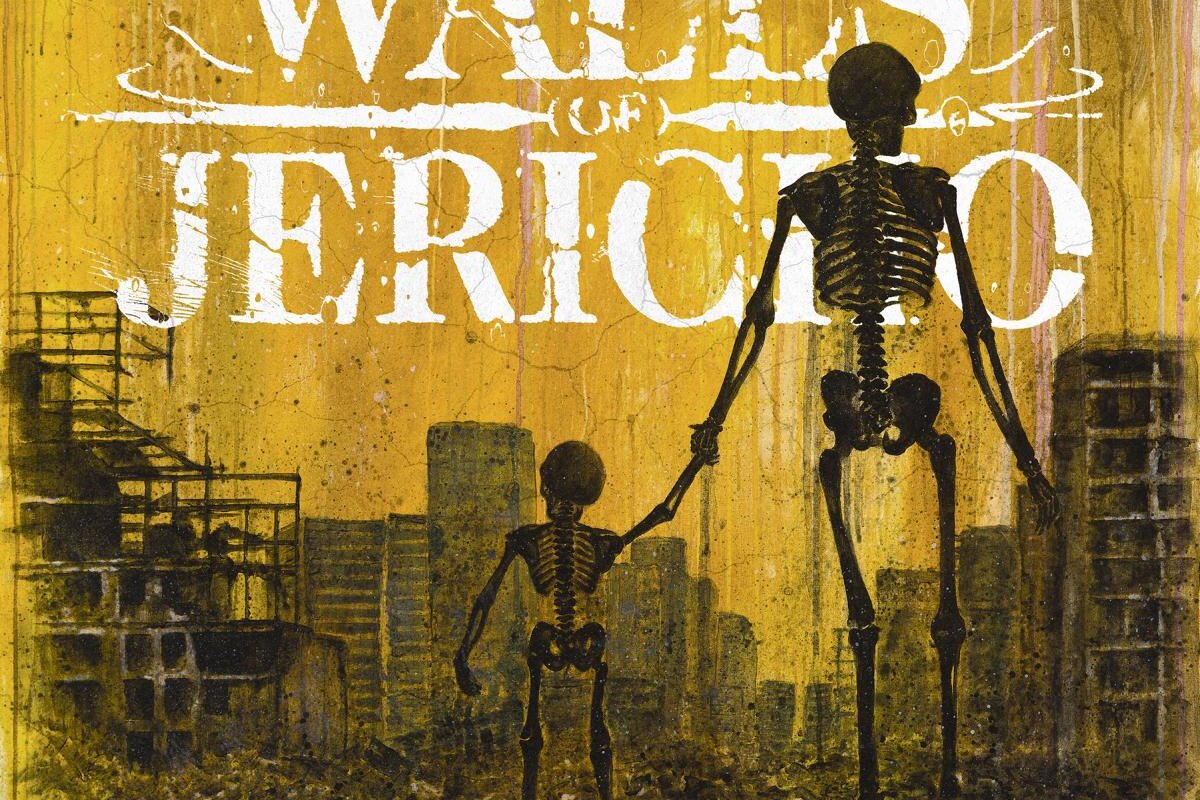
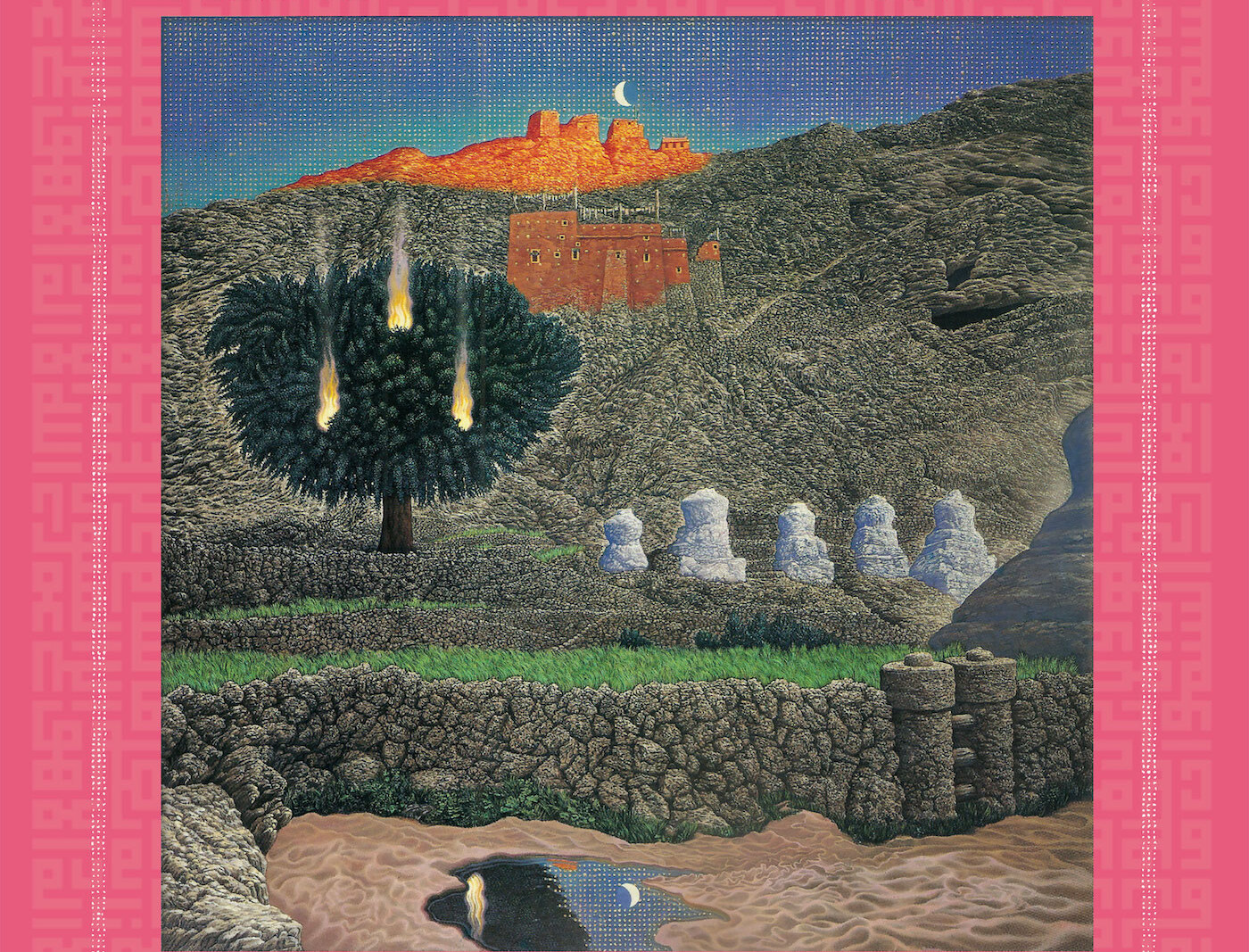
Similarly some of the tracks that ended up on Listening To Pictures and Seeing Through Sound had working titles that nearly ended up being used but were switched at the last minute. As the pieces performed in this concert utilise riffs, ideas and motifs that ended up on those records, it felt appropriate to finally bring these title ideas of Jon into play. Ndeya also cleaved close to Jon’s original concepts for the Pentimento series in the artwork for the record. After contacting Dan Keuhn, the sleeve designer for the first two Pentimento albums, he revealed a folder of early draft versions, including a vibrant pink framing that Jon was fond of (also echoes of the Possible Musics sleeve) before deciding on balance to go with the black and yellow of the final Listening To Pictures sleeve. The first two Pentimento records used elements of the 1976 painting Leh C'est Beau by Jon’s great friend Mati Klarwein, who lent his striking visuals to many of Jon’s album sleeves, as well as several iconic albums by the likes of Miles Davis and Santana. The label licensed the painting with the kind co-operation of the Klarwein estate, and it feels appropriate to have this imagery, so loved by Jon, gracing the final album cover, continuing a tradition that stretches back to 1978.
Ndeya was also fortunate to receive valuable input from the two musicians who played with Jon at this concert (and appear extensively on the other two Pentimento records): Rick Cox and John von Seggern, with the multitrack audio carefully captured by Jon's longtime sound engineer Arnaud Mercier, and then mixed, edited and co-produced by former band member Jeff Rona. This process went beyond normal live mixing, as Jeff explains in the liner notes: “It was clear there were some moments in the concert that were problematic for Jon. However, I felt I could make careful edits to the spots in his performance that would recreate what I thought Jon intended. I worked on it for a few days and had Jon over to listen. I could see the relief on his face, and we went through the whole performance again, flagging additional issues both in his playing as well as some other areas of the show he wanted improved. I asked Jon for permission to get a bit more creative in order to make it sound like a more polished album, and he agreed. I spent a few weeks, between other projects, working on the album’s overall sound and vibe with the goal of capturing the magic of that concert (which would turn out to be Jon’s final public appearance) while giving it the meticulous attention Jon always insisted upon. It was a gratifying and bittersweet experience for me to work on this project and give it the send off it deserves.”
Work continues on the cataloging and digitising of the archive of material Jon left behind as this release comes out. Solid progress has been made with this, and there are a number of exciting unheard recordings and reissues of classic records that will be coming out in the next few years.
ABOUT JON HASSELL
Jon Hassell passed away at the age of 84 on 26 June 2021, leaving behind a significant legacy of highly influential music and art created over his lifetime. A trumpet player, composer and musical conceptualist, he was a Zelig-like figure who interconnected with an enormous range of 20th century art and music: growing up going to juke joints and blues parties in post-WWII Memphis, Tennessee; studying under Stockhausen with Holger Czukay and Irmin Schmidt of Can; befriending Terry Riley and playing on the classic recording of “In C”; forming part of the Theatre Of Eternal Dream Music with La Monte Young and Marian Zazeela; mentored in raga by Prandit Pran Nath; playing with David Rosenboom and Naná Vasconcelos on his first record; collaborating with Eno; playing on Remain In Light with Talking Heads; a lifelong friendship with the artist Mati Klarwein; recording with Farafina, Ry Cooder, Leslie Winer, Juan Atkins, Moritz Von Oswald, Peter Gabriel, David Sylvian and Björk, amongst many others; film soundtracks, theatre work, an opera, a children’s book (!), the full list goes on and on, and it is only in the last few years that people are beginning to appreciate the full breadth of his achievements.
The Ndeya label was set up by Jon in partnership with Warp Records as a home for his music. So far Ndeya has issued his two Pentimento albums - Listening To Pictures (2018) and Seeing Through Sound (2020), a remarkable curtain call from a true auteur, as well as a much-needed reissue of his debut album Vernal Equinox, remastered from the original tapes, and a limited run collection of his writing about his own music, Atmospherics. Now that he is sadly no longer with us, Ndeya is working with Jon’s estate on preserving his legacy going forward, with a number of archival projects underway.
"Go through his catalog and his trumpet becomes a phantasmagorical thing, something that transcends language, both unheard yet uncannily familiar. It's a canopy of tropical birds, a woman's plaint in a foreign tongue, a buzzing insect, a Bedouin horn calling across the dunes, the distant whistle of a train, Chet Baker on Venus." - Resident Advisor
Read more
All articles →