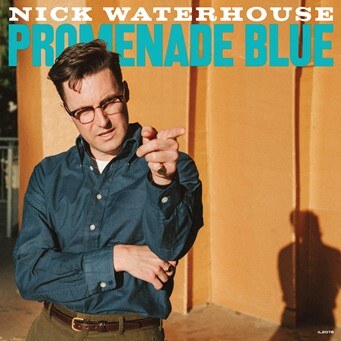
Nick Waterhouse "Promenade Blue" Out Today
F. Scott Fitzgerald’s classic work The Great Gatsby came to represent the Roaring Twenties, an era of decadence and spiritual vacuousness, using the color green to represent longing and hope for the future. A century later but once again in the ’20s, Nick Waterhouse takes the color blue as his hue of choice as he takes a spiritual look to the past on new album Promenade Blue. The new collection sparkles beatifically, reverberating with energy, heart, creativity, and vibe from start to finish.
CONCERT - 25 OCTOBER 2021 - DEPOT LEUVEN
In Nick’s musical and lyrical world, blue is a refraction of his life and memories — shadowing a deep, spiritual San Francisco that fostered his musical vocabulary but has now been stamped out irrevocably; evoking the endless tours, marathon recording sessions, and highs and lows of success he’s experienced in his decade-long career; conjuring romances that were doomed, loves that lingered, and hope for future days of parity and partnership; summoning spirits of people who have gone but permeate his mind forever.
It is vivid and magnetic, buoyed by both light and density due to Nick’s newfound collaboration with producer Paul Butler (Michael Kiwanuka, Devendra Banhart). It’s not Gatsby’s New York in the 1920s, it’s Waterhouse’s California in the 2020s.
“And as I sat there brooding on the old, unknown world, I thought of Gatsby's wonder when he first picked out the green light at the end of Daisy's dock. He had come a long way to this blue lawn and his dream must have seemed so close that he could hardly fail to grasp it. He did not know that it was already behind him, somewhere back in that vast obscurity beyond the city, where the dark fields of the republic rolled on under the night.
Gatsby believed in the green light, the orgastic future that year by year recedes before us. It eluded us then, but that's no matter — tomorrow we will run faster, stretch out our arms farther. . . . And one fine morning——
So, we beat on, boats against the current, borne back ceaselessly into the past.”
Read more
All articles →