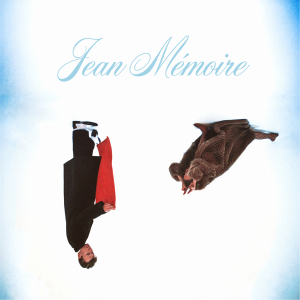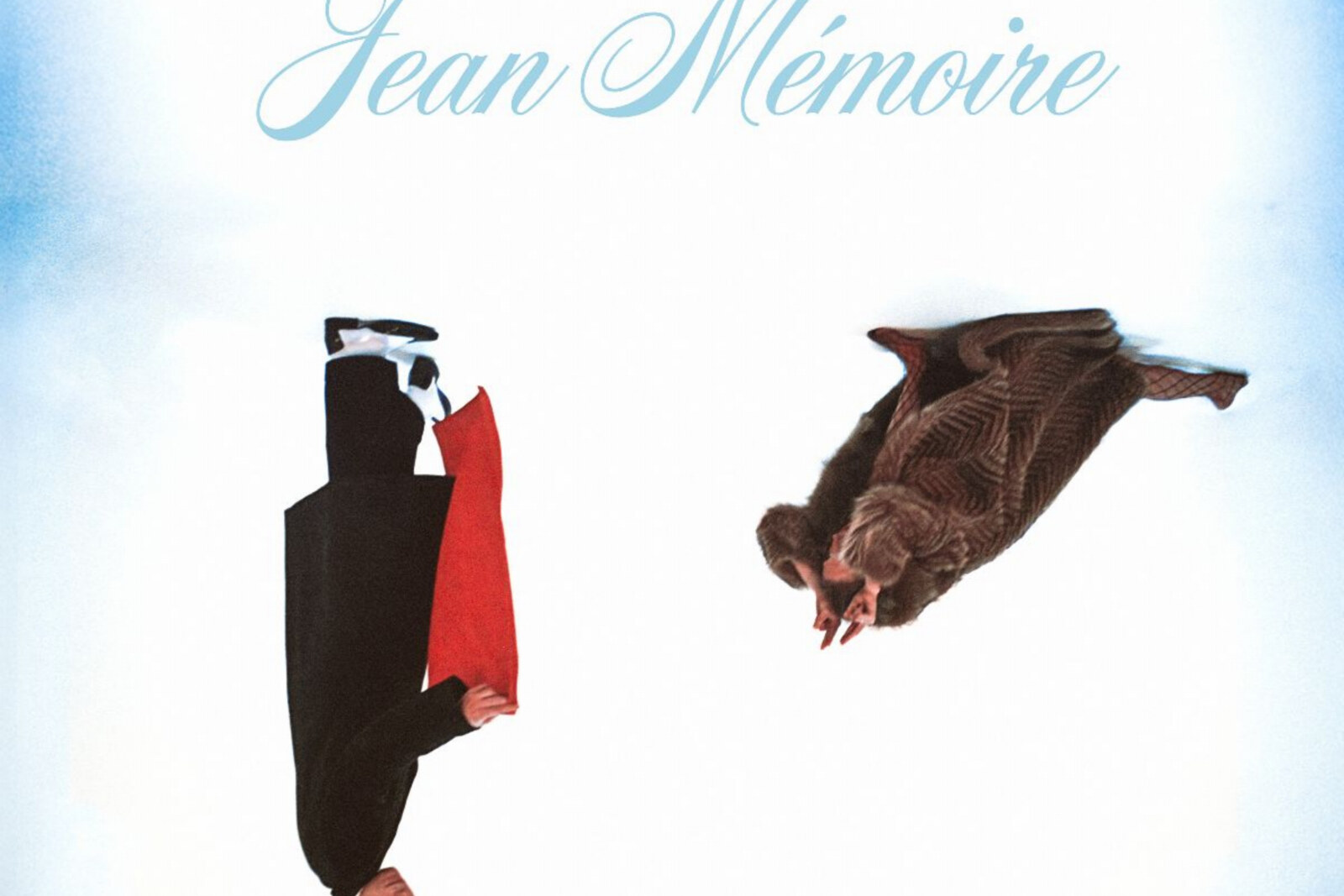
Sasha le Fou & Tippi Parade release eclectic debut album "Jean Mémoire"
Multi-talented and freshly married couple Alexander Deprez (Sasha Le Fou), 1995, Kortrijk (BE) and Sarah Neutkens (Tippi Parade), 1998, Eindhoven (NL) proudly present their eclectic debut album, ‘Jean Mémoire’. Jean Mémoire plays the main character in this genre-defying rollercoaster ride, narrated in four different languages and dialects (West Flemish, Dutch/Kempisch, French, and English). Together with the listener, he is confronted with the intertwined layers of societal and personal trauma’s. Sasha le Fou & Tippi Parade reveal an undeniable truth: nothing is not political. Tu nous rejoins?
Read the five-page interview in Knack with Sasha le Fou and Tippi Parade here.
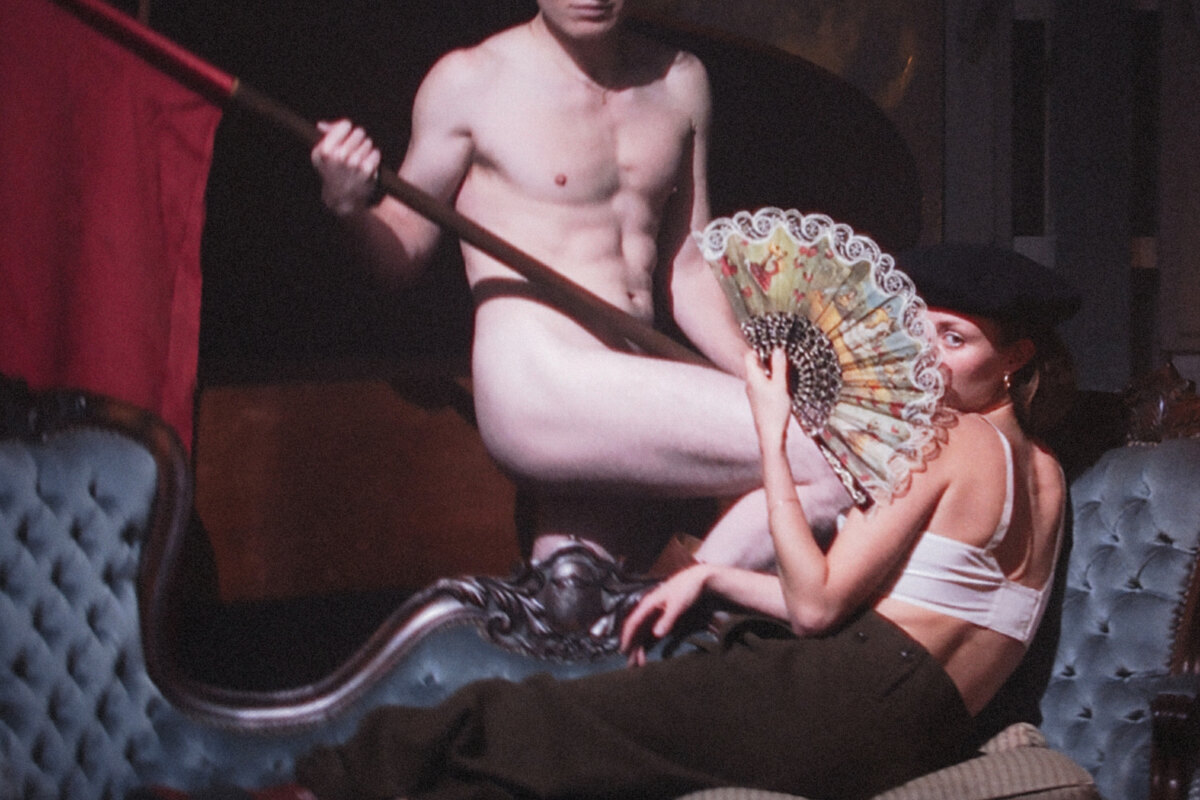
As multidisciplinary artists, Sasha and Tippi’s approach centers on a total concept —a Gesamtkunstwerk— that fuses music, theater, cabaret, visual arts, and poetry. They push all boundaries, shatter conventions, and deliver an explosive artistic experience that refuses to be boxed in. In a world in crisis, in a world ablaze, the need for political messages in music has never been more urgent. Sasha le Fou and Tippi Parade deliver political satire in a more accessible form, wrapped in a message that will leave few untouched.
Stop 1: PSA
Where to begin? Well, let's first take a look at 'dissociation'. This can be a symptom of unresolved trauma. You become alienated from yourself and/or the world around you in order to cope with a traumatic experience. While it is a survival mechanism and, in a way, something beautiful, it’s a bizarre idea that we not only experience personal alienation but also collective alienation on a massive scale. For example, how do you deal with the fact that such a large part of the population lives below the poverty line? With a government that mistrusts you, discriminates against you, and adds fuel to the fire in international conflicts?
Stop 2: Comment tu t'appeles?
Most women don’t have their own name. That may sound a bit strange, but it actually is. Why do women automatically take their father’s last name? Why do you automatically take your husband’s last name if you want to marry one? Why is a woman’s position always defined in relation to that of a man? And what consequences does this have for a woman's self-awareness and her position in society?
Stop 3: Chanson de Tippi
With a text inspired by the poem ‘Roses Strewn on the Road’ by Kurt Tucholsky, Tippi Parade sings about the tragic fate of the oppressed under fascism. For fascism is certainly not something buried with Mussolini, Hitler, or Franco – it is still just as relevant today. Don’t flirt with it!
Stop 4: Jean Mémoire
Aha, here he is: Jean Mémoire. One of many in the working class, weathered and made resilient by life. He’s had enough: j’en ai marre. He no longer wants to wait for change, he doesn’t want to burn his friends anymore, he’s tired of being humiliated and belittled by the ruling class. He stands at the beginning of an intense trip to stir up his subconscious. What is he planning?
Stop 5: Michael Parenti
There are few contemporary intellectuals who truly think clearly and then express it so passionately and compellingly. In this excerpt from the classic ‘Yellow Parenti’ lecture, accompanied by free-jazz music, Michael Parenti fights for decolonization and ardently advocates for the abolition of imperialism. "Those countries are rich! Only the people are poor." and "These countries are not underdeveloped, they are over-exploited!" are two of the most striking statements from this lecture. Ultimately, we must ask ourselves: who actually benefits from both domestic and foreign policy?
Stop 6: Conspiracy Theorist
Now that you've likely reached the very human conclusion that the working class does not benefit from colonialism, imperialism, pitting the population against each other, letting children sleep on the streets, warming the planet, granting exorbitant bonuses to CEOs while squeezing the staff, expelling and discriminating against refugees, humiliating people who are more practically oriented than bookworms, suppressing women, etc., etc., you can rest assured that the ruling class will also dismiss you as a genuine conspiracy theorist.
Stop 7: Où es-tu mon amour?
How should one approach this collective and personal trauma recovery process? Sasha le Fou feels lost – he struggles with a severe alcohol problem, inherited from his father, his father’s father, and probably from many other fathers and mothers in the working class who came before him. Grief is there to drown in. He searches for the love that can offer him the safety and stability to say goodbye to his alcoholism. But where are you, my love?
Stop 8: Motivez-moi
Among the ruling class, panic reigns. They may generously sponsor the tobacco industry, condemn workers to eat cheap junk because a healthy alternative is unaffordable, benefit from large manufacturers pumping CO2 into the air, and do nothing when the average roofer, healthcare worker, or musician works themselves to the bone by the age of fifty, yet they do not feel responsible for the problems they cause. No, the depressed, sick, old, and weakened people must be motivated. Offer a large sum of money? Motivation through rewards like free healthcare, a roof over their heads, or personal appreciation? Not a chance. The ruling class has a much better way to push people into the labor market. Nothing is too extreme for this: kick us out of our homes, take away our free time, make groceries even more expensive – that will really motivate them!
Stop 9: Zakdoekje leggen
Focustrack 'Zakdoekje leggen' ('hanky panky') sounds like an innocent nursery rhyme but it's the opposite. It's Tippi Parade's honest story about her years of abuse. Her lawyer advises her not to talk about it: after all, the law is written by those for whom it is very convenient not to be punished for crossing boundaries, abuse, and manipulation. But it is no longer a secret: as long as these things happen behind closed doors, the victims have nowhere to go. Tell no one? Definitely not. Grab that handkerchief and lay it down by the perpetrators!
Stop 10: Man in Pak
They imagine themselves safe in their ivory towers. Somewhere far below, you see the worker toiling for their money. Yet, current events prove that CEOs and other world leaders might be facing a blow sooner than expected. The people, after all, are many more, and they can lose everything in the blink of an eye – it’s time for revolution.
Stop 11: Wavan leeft de mins
A reinterpretation of Bertolt Brecht’s Wovon lebt der Mensch, but with the final voicemail of Sasha le Fou’s father as an alcoholic before he will permanently turn his life around and leave the drink behind. "Die, like every pig," he says. For that is the fate of the worker. Our lives are played with. Because, let’s be honest, is life in this society really living, or is it merely surviving?
Stop 12: Je suis ici
The final station is in sight. The two lost souls, Sasha and Tippi, find each other: finally, they have found the peace and stability to clearly examine the problems of the world and the webs in their minds. Who do they want to be? What can they mean for the world, and where can social struggle lead? They combine their forces and offer Jean Mémoire insight into his traumas and where they stem from. Salvation is near – Je suis ici!
Read more
All articles →