Simon Moullier Announces New Album "ELEMENTS OF LIGHT", Releases First Single '808'
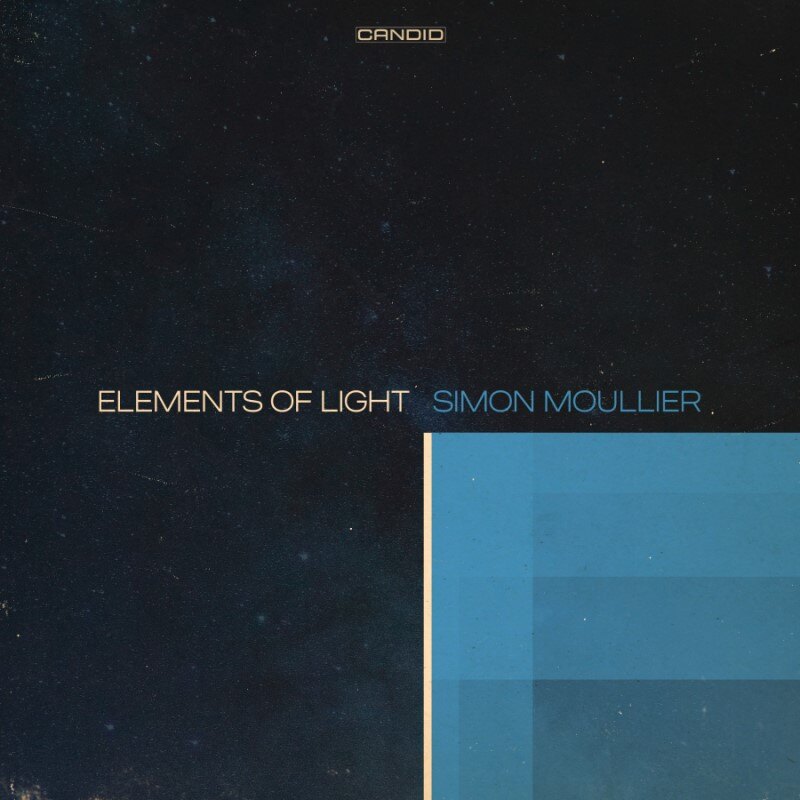
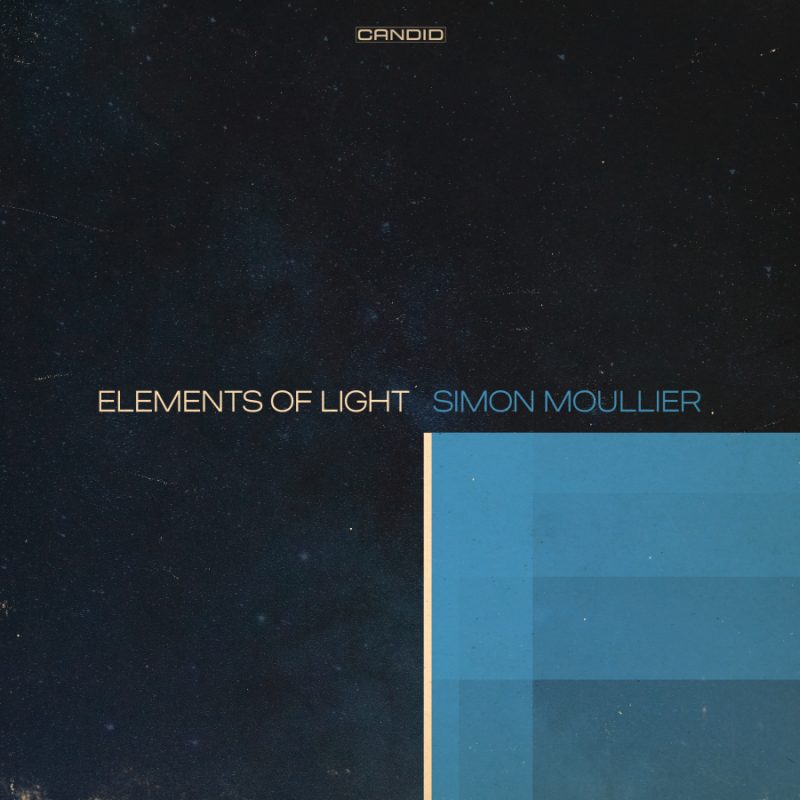
Today vibraphonist-composer Simon Moullier announces his newest album Elements Of Light, to be released on September 20th on the legendary Candid Records label. The album features Moullier’s remarkable quartet along with special guest appearances by Gerald Clayton and Marquis Hill. Simon Moullier is also releasing today his first single “808”, available for streaming on all platforms.
In discussing Elements of Light, his fifth album as a leader, the vibraphonist-composer Simon Moullieroften returns to a specific term: unfolding.
“This is an important word — the unfolding of a song,” says Moullier, who was born in France and lives in New York. “It’s something I’m very attached to, and something I’m always working on.” As he explains, many of his essential influences —Wayne Shorter, Milton Nascimento, Toninho Horta, Radiohead’s Thom Yorke, Ravel, — have been masterful unfolders in their writing. Moullier admires the movement and design in their music and harmony, the way one section of a tune leads into the next, everything flowing in a natural, beautiful, inviting way. Even the most serious intellectual musical concepts are rendered with a directness, a simplicity that can captivate a general audience. “For me, no matter how complex an idea can get,” he says, “clarity is always key .”
That’s a mature, evolved outlook for a millennial jazz musician to embrace, and it’s shared among Moullier’s youthful quartet featuring pianist Lex Korten, bassist Rick Rosato and drummer Jongkuk “JK” Kim. What’s more, these musicians of astonishing technical facility interact with the selflessness and good taste that Moullier’s song-focused music requires; to say it another way, they use their virtuosity to make the bandleader’s compositions sound as human and affecting as possible — never to preen.
Elements of Light isn’t “crossover” jazz or “jazz-adjacent”; rather, it is a personal and original expression of a tradition Moullier inherited from his heroes. “What really influenced me is the language of horn players and singers and piano players,” says Moullier, who goes on to name Trane, Bud Powell, Bird, Sonny Stitt and Cannonball, among others. “And that’s the language I’ve always tried to reproduce on my instrument .”
“To move forward, it helps to first go backwards in time,” he adds. “It has always helped me in shaping new writing, because I feel like the architecture of the tunes back in the day was so clear. There’s a reason standards are a common language for our entire community: They allow us to communicate with each other and have a platform on which to expand.”
Moullier is part of a new generation of Candid Records artists who have come to the label via Candid A&R consultant Terri Lyne Carrington. The recently relaunched label - which already has 4 Grammy wins to its credit since 2021 - is building on its legacy as one of the most storied and influential American independent labels of the 1960s. More info on the new Candid Records HERE
Throughout Elements of Light, Moullier reconciles his abiding love for midcentury acoustic jazz with inspired production choices more often put to use in pop and alternative rock . So you’ll hear Real Book-worthy tunes of remarkable craft and efficacy — with vibraphone and piano melodies that are subtly reinforced by synthesizer. “I really love the sound of piano and vibes together — how the texture creates a third instrument,” Moullier says.
In an effort to perfect the big-picture contours of his compositions, Moullier painstakingly tracks demos of his work at home, then lives with those recordings until he feels comfortable making revisions. Drum-machine loops have recently become a part of Moullier’s composition process, and often precede the melody. In the case of a tune like the lead-off track, “808,” beats meld flawlessly with JK Kim’s agile precision behind the kit. “It’s been fun to experiment with blending acoustic sounds with these more electronic worlds,” Moullier says. Similarly, the majestic earworm “Bird of Paradise” was built from a blend of acoustic and machine-made rhythms.
Elsewhere, Moullier demonstrates a unique skill for merging seemingly disparate influences with imagination. On “Pyramid of the Sun,” he integrates elements of progressive rock and blues. “Primavera” acknowledges Debussy, Stravinsky and Ravel in its intro, and the ballad writing of McCoy Tyner and Joe Henderson as it unfurls.
“Jiwa” is a tenderhearted homage to Moullier’s favorite Brazilian composers —
Milton Nascimento, Djavan, Toninho Horta — who “have become a very important part of my writing and the way I hear music,” he says. The vibraphonist’s “Olympus” is an old-school bop burner of expertly controlled intensity.
Along the way in Elements of Light, a couple of special guests elevate the proceedings. The pianist Gerald Clayton, who appears on the title track, gave Moullier deeply meaningful lessons when the vibraphonist was a student at the Herbie Hancock Institute of Jazz (then still the Monk Institute). Reflecting on this casual mentorship today, Moullier’s appreciation remains palpable. “He was incredibly helpful, in a very grounded way,” he says, adding that the lessons were not only about music, extending into more general wisdom about creative direction and life decisions. The track is one of the album’s most interesting, and unusual: a vibes-piano-drums trio performance, with Moog synth bass played by Moullier added in post-production, and with an acoustic drum sound heavily indebted to drum-and-bass.
“Lotus,” featuring the Chicago-rooted trumpeter Marquis Hill, nods to the short piano compositions of Mompou. with a key change near its end that evokes the concept of rebirth (hence the title). Moullierpursued the collaboration because, he says, “I’ve always loved his tone.” But he got so much more. “Marquis sent me his track, and I thought it was just going to be trumpet,” Moullier recalls. “But no, it was trumpets, flutes, ambient percussion. He created a whole world within the song.”
With a closing take of Wayne Shorter’s “Oriental Folk Song,” Moullier offers gratitude to an irreplaceable mentor he was able to spend time with during his studies at the Hancock Institute.
Shorter’s tutelage was beyond profound. “He was always searching behind the sheet music, for hidden things that need to be found,” Moullier says. “For me, that hidden thing meant having a grasp on the bigger picture of where the song is going and what emotion you’re trying to get out of it.” With Elements of Light,Moullier puts Shorter’s sage guidance into practice, with extraordinary results.
Read more
All articles →