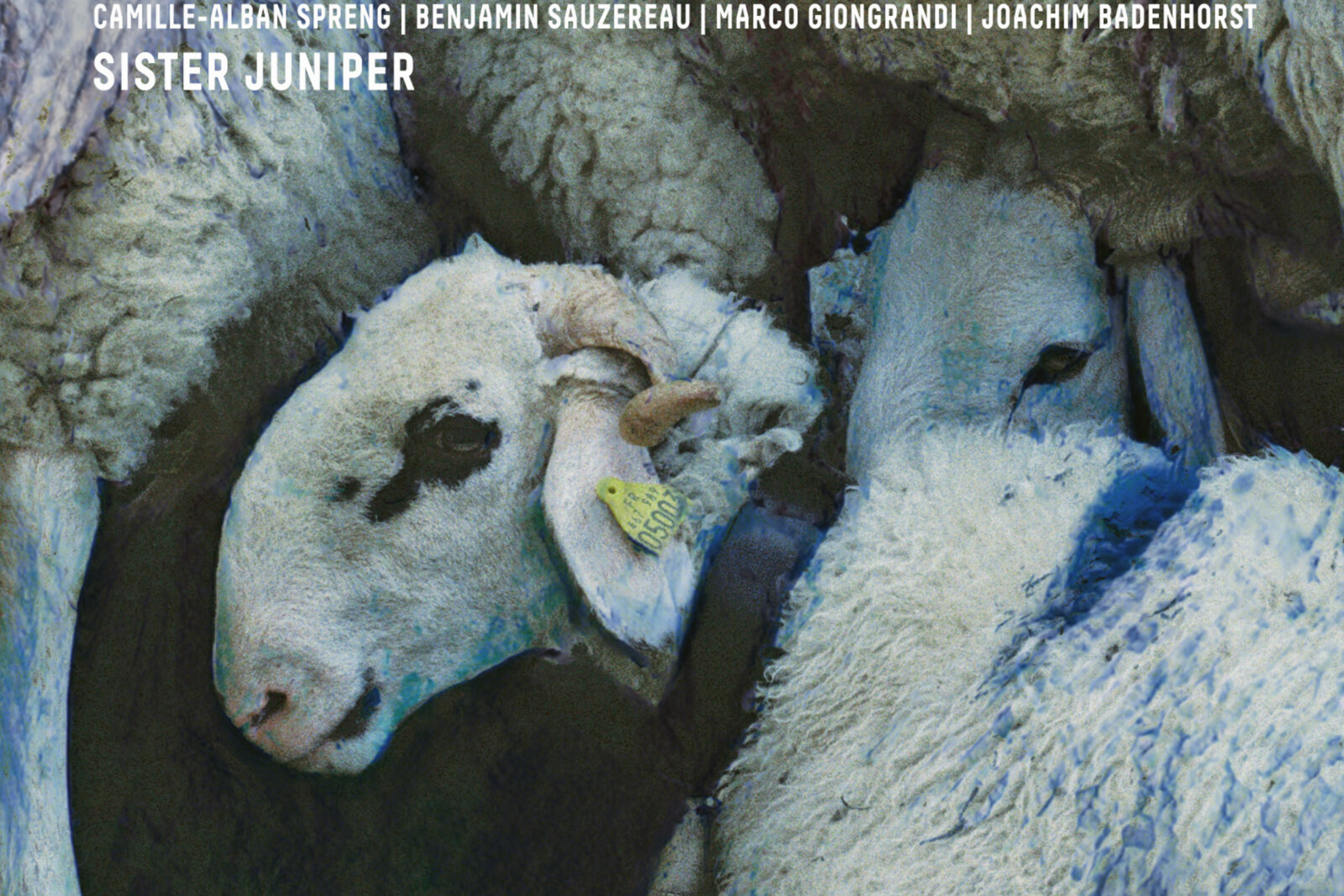
‘Sister Juniper', new album of chamber jazz ensemble Dear Uncle Lennie
"To one degree or another, we all have an intimate relationship with stories: those we tell by the fireside, those we've lived or dreamed, those drawn from films, folklore or fairy tales. Each, in its own way, feeds our need for the imaginary, our desire to escape. When pianist and composer Camille-Alban Spreng founded Dear Uncle Lennie in 2022, it was with this very desire: to question the evocative power of stories, without words, through brief instrumental forms. The project takes the form of a chamber trio with guitarist Benjamin Sauzereau and banjoist Marco Giongrandi, recurring companions and players on the Brussels jazz scene.
The band's first album, initiated this work on the short, intimate format inspired in particular by the art of haiku. The underlying theme is a fantasized America: that of the gold rush, westerns and great family frescoes as anchors. An imaginary world developed in eighteen brief, rawly expressed titles, dotted with mysterious places and characters with a constant concern to suggest rather than show. Like its predecessor, ‘Sister Juniper’ is a collection of snapshots. Twelve tracks, this time more variable in length (between one and eight minutes), but all sharing the same allusive quest. ‘Dear Niece Thelma’, ‘Two Is Not An Army’ or ‘Behind The Barn Grew Three Little Trees’: so many equivocal, photogenic song titles, where the shadow of an intimate epic is outlined. At least, we're guessing, from the family members, mysterious numbers, house settings deployed here like clues to an uneventful plot, a disjointed narrative whose chapters have been deliberately jumbled.
So, where do we stand here? The album is, in a way, the second season of this musical and family laboratory. With a few differences: in addition to the original miniatures, there are longer pieces, more complex in their narration. ‘Daniele’, for example, starts off with a whimsical energy before unfolding with astonishing delicacy, or the polyrthymic ‘Platoon Five’, gradually developing into a joyous, solar trance. Some tracks are minimalist, contemplative, while others are achieved through the accumulation and interweaving of sound sources. The guitar electrifies the acoustic sources, the banjo deepens the suggestive expression of the whole, the piano is inspired by fingerpicking, blurring the registers. The aim is always the same: to expand the labyrinth of forms employed, to lead us astray without ever losing us in these landscapes with their false airs of an imaginary OST.
The trio extended these explorations by entrusting the recording and mixing of their album to producer Koen Gisen, renowned for his approach to recording and accurate reproduction of acoustic sources. This collaboration is complemented by that of Antwerp clarinettist Joachim Badenhorst, who is featured on certain pieces. This wind instrument provides a means of counterbalancing the short, percussive sounds induced by strummed and struck strings.
Musically, ‘Sister Juniper’ extends the atmosphere of the first album, with its willingness to visit several traditions and genres without ever settling on one. Folk songwriting rubs shoulders with minimalist, repetitive music, jazz meets country in a wide variety of instrumental expressions. Here and there, we can detect many inspirations: Sufjan Stevens, Daniel Rossen or Bill Frisell, to name but a few. But it would be a betrayal of the project’s originality to link it to the artists from whom it borrows, since the aim is more to create a new folklore, free as possible from all conventions.
‘Sister Juniper’ is all of these things: an album of mysterious fantasy and musical freedom, leaving the listener free to venture into his or her own world and make it their own. It's like a fireside where stories come to life and transform themselves to the level of dream we wish; we're free to add our own. » - Booklet text by Romain Besnard
Read more
All articles →