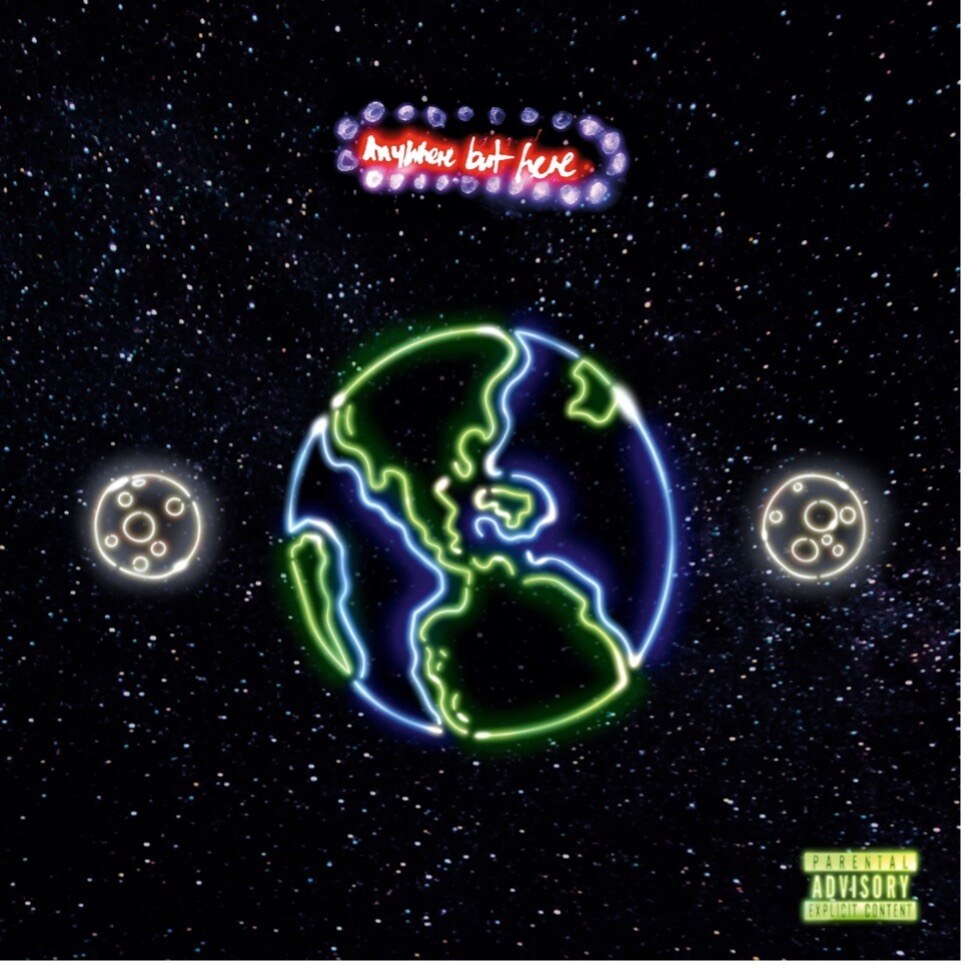
Sorry announce hugely-anticipated second album 'Anywhere But Here'
North London’s Sorry have today announced their hugely-anticipated second album Anywhere But Here - out 7 October on Domino. Sorry have also shared their brand new single ‘Let The Lights On’ taken from the record.
Sorry’s universally-acclaimed debut album 925 earned a string of near-perfect review scores, A-List national radio playlistings and global media profiles upon its release in March 2020. Anywhere But Here is the band’s first full body of work since the Twixtustwain EP arrived last year, alongside the official digital release of their brace of 2017 mixtapes Home Demo/ns Vol I. and Home Demo/ns Vol. II.
Anywhere But Here will be available on 12" vinyl (with a limited version featuring gatefold sleeve, neon green and transparent green vinyl options, 4-page lyric booklet, A2 fold-out illustrations poster), CD, cassette & digitally.
Commenting on new single ‘Let The Lights On’, which was produced by Charlie Andrew and is accompanied by a MILTON & FLASHA directed video, Sorry say: “It’s a fun love song for the club. A bittersweet track for us. It kinda touches on how you want to be honest and say things directly, but in the end that can also ruin them. If you’ve got a light don’t let it go out... sometimes you have to leave things behind but it’s hard to do. We tried to make it a bit ironic by saying things very plainly and direct. It’s the last song we wrote from the album and came out of us trying to find something more upbeat for the album. It started off as a dancey song with driving bass and drums and became more poppy when we played it with the band and recorded it.”
Anywhere But Here was produced by the band’s Louis O’Bryen and Asha Lorenz, and Ali Chant along with Portishead’s Adrian Utley in Bristol. Explaining more about Anywhere But Here, Asha says: “Anywhere But Here! We approached the album differently from the first one, it was more of a live band process and the outcome has made it feel rawer and more sincere... we think. We wanted every song to have its own gravity but also have little snippets, or lyrical patterns that repeat, grow - metamorphosis. Everyone started to feel a bit alien in the last couple years with all that’s happened. It’s kind of weird being from London, growing up here, like anyone who’s been in the same place for ages. How all the landmarks, places, even people are the same, but it still feels different. I think we want things to change, or we think they will, but it kind of just happens again but in a different way. That sound is kind of the sound I imagine when you moan or cum or deep cry – it’s like rebirth. It’s the shedding of a skin!”
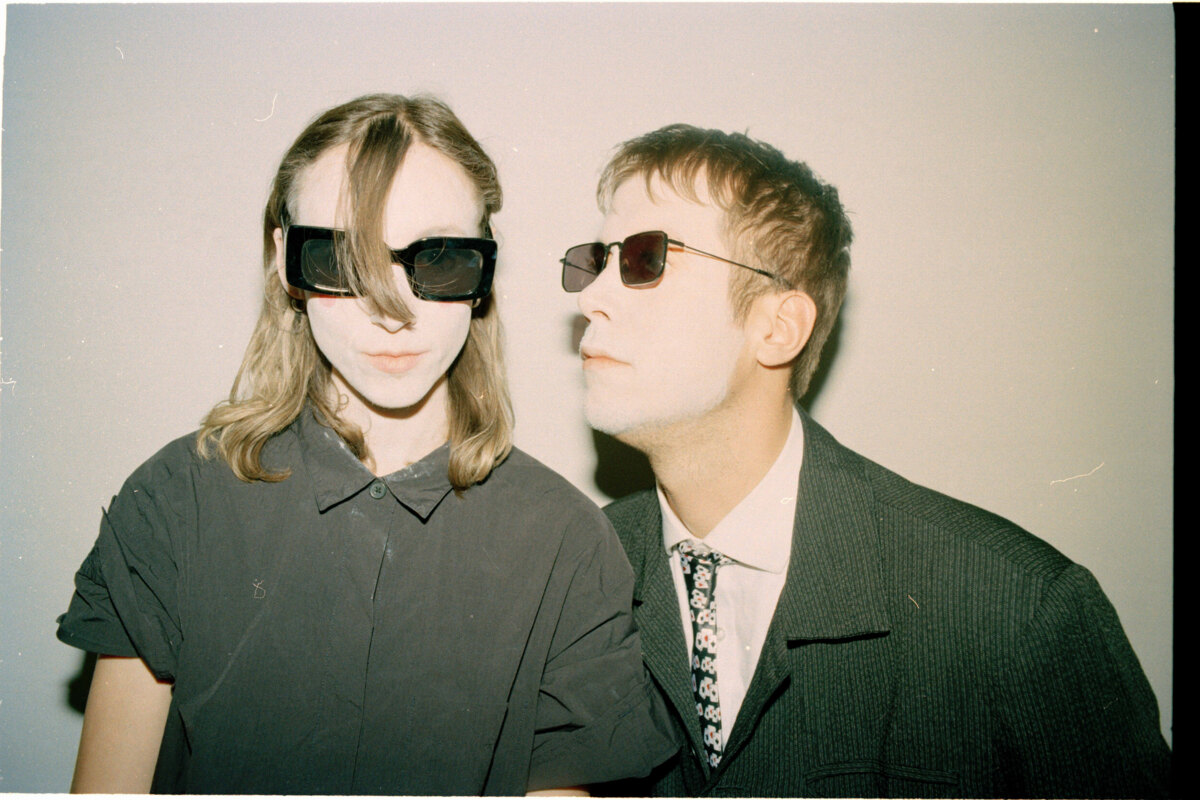
Composed of best friends and co-conspirators Asha and Louis, joined by drummer Lincoln Barrett, multi-instrumentalist Campbell Baum, and Marco Pini on electronics, Sorry have been making music together since their teens. Emerging from Brixton’s Windmill scene, where they played alongside Shame, Goat Girl and Black Midi, Sorry have created their own distinctive musical world - one that draws together a shared passion for lo-fi sounds of grunge, trap, and shoegaze.
If their first full-length album 925 (produced by Lana Del Rey and Gorillaz collaborator James Dring) was more electronic, Anywhere But Here pays homage to classic songwriters of the 1970s, such as Carly Simon and Randy Newman. Asha’s nonchalant salty-sweet vocals contrast with detuned/discordant guitar sounds echoing early ‘90s bands, Slint and Tortoise, and the irregular beats of Kanye or Capital Steez.
London features as a prominent character on the album. Earwigged conversations, text messages, snatched speech recorded underground; the city’s discarded words fed into the lyrics which map the experience of urban life on a young and frustrated generation. But this is a different type of city to 925’s, told through the voices of two people in their early 20s whose lives have become insular. ‘If our first version of London in 925 was innocent and fresh-faced, then this is rougher around the edges. It's a much more haggard place,’ Louis says. For Asha, this period of intensity was challenging: ‘I just did what everyone else did, I went a bit mad.’
As her romantic relationship disintegrated, slow days were spent reflecting on the recent past. ‘I felt like everything was just getting so far away from who I was,’ she says. ‘I kept thinking 'who am I now?' Her mother, a Death Doula, returned home each night from providing spiritual guidance to patients in the end stages of life, with profound stories that were impossible not to absorb. From these domestic periods of disquiet and unease, Asha wrote the closing track ‘Again’, about rebirth and death, with an arrangement responding to the idea of frequency that transcends the female body: ‘The world shone like a chandelier / and I was lost for good.’
A sense of newness sits at the heart of Sorry’s songs - of what it means to be young and upended in the 2020s, with all the challenges and ingenuity that life in the metropolis brings.
Watch video
Embedded content from a social media network that wants to write or read cookies (YouTube). You have not given consent for this.
Read more
All articles →