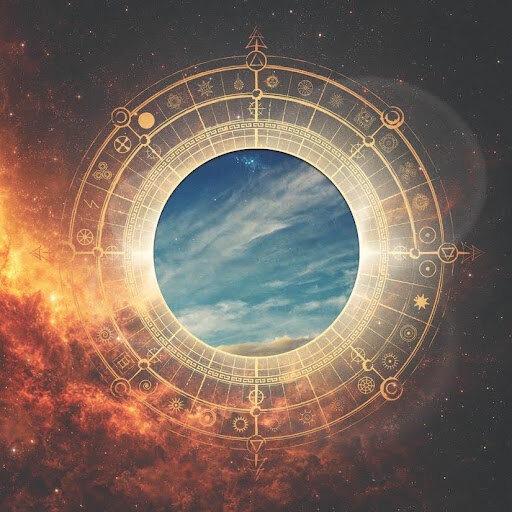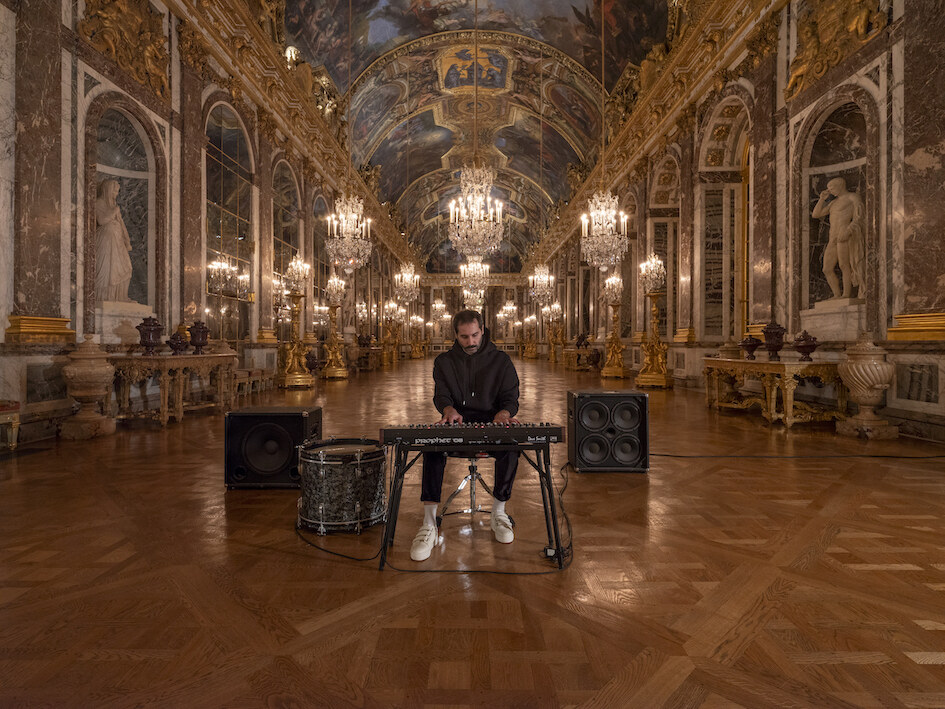
The Palace of Versailles welcomes Parisian composer & producer Saycet to recreate an acoustic adaptation of electronic track 'Solaris'
Parisian musician, composer, and producer Pierre Lefeuvre, better known as Saycet, today releases the official music video for Messa Solaris. The video was filmed over the course of seven days and seven nights as part of a unique musical installation at The Palace of Versailles.
Collaborating with organist Alexandra Bartfeld and the vocal ensemble Les Métaboles, Saycet was invited to attend The Palace of Versailles to create a new and acoustic adaptation of his recent single, Solaris. An invitation which was impossible to reject, Saycet’s first call to action was to re-compose and arrange his original piece of music, to be performed on and to be centred around The Great Organ of The Royal Chapel which dates back to 1710. An instrument steeped in history spanning the ages, Saycet’s electronic arpeggios take a trip back in time, performed on The Great Organ which is tuned in a key which is no longer present in today’s music.
“In 2020, the Château de Versailles invited me to create a piece based on its musical and visual heritage. As I was deep into the production of my new album at the time, I suggested going the opposite route: starting with a piece from the album and composing a variation inspired by the heritage of the palace. We chose Solaris, which, as a reference to the sun, was a natural fit for Versailles" – Saycet
Utilising many of the palace’s historical locations and acoustics including the Royal Chapel, the Gabriel Staircase, the Galerie des Batailles, the Galerie des Glace and the metronomes of the clocks, Messa Solaris blends the ideas of modern music with the history of one of France’s most symbolic and culturally important heritage sites.
“I made the space my own. I also made sound prints in each of the rooms to capture the different reverbs. At least 90% of the final track was recorded in the castle using its architectural and sonic elements” – Saycet
The music video for Messa Solaris has been created by the French production house, Sourdoreille, highlighted by atmospheric and long-tracking shots which take the viewer on a visit of the palace’s breath-taking locations. The stunningly visual project also sees the vocal ensemble, Les Métaboles, perform in long blue dresses which have been designed by Alexandre Mattiussi (of AMI Paris),giving the video a modern and surprising reference to the gospel music that anchors The Palace of Versailles in the 21st century.
The project has received a momentous reception across France, with national media including LCI, France 3, France Musique and more all applauding Messa Solaris.
At first glance, Saycet's journey may seem peculiar but in reality, it is extremely fluid. A backward evolution away from our current era, which churns out artists non-stop – a path that has made Pierre Lefeuvre, the brain behind his Saycet project for the last 15 years, a key figurehead in the French electronic music landscape.
After release his first album, 2005’s One Day At Home, Saycet built upon a genre that had fallen into relative disinterest. Deliberately melancholy, errant electronic music made somewhat more accessible by pop melodies and experimental sounds. An outsider by nature, he was nonetheless spotted by influential media outlets, finding an international fanbase that would remain faithful to him through the years.
With time, Saycet’s creative work became more refined, and his influences merged into a highly personal approach that succeeded in linking cerebral music with an opening to a wider audience. 2010’s Through The Window and 2015’s Mirage continued the project’s evolution towards a more timeless sound that shone through its arrangement work and an asserted versatility. Tours of Asia and collaborations (with Juliette Armanet and Yan Wagner among others) helped Saycet grow further (yet still outside of the mainstream’s radar) nonetheless finding his niche on the international music map. His approach to live performances cemented his place as an innovator, always in search of new aesthetic grounds, with stage shows that implemented video projection as a source of lighting rather than as mere visual illustration, creating a truly immersive experience in the process.
Somewhat accidentally, Lefeuvre opened the doors to composing via images – a logical, uncalculated continuation for this production artisan, whose composition work is nourished by visual art and cinematic culture. He created his first score for the 2019 feature Un Vrai Bonhomme and started making headways into the circle of pop music composers who collaborate with filmmakers.
More recently, Saycet composed the music for the Canal documentary Bastard Lion which was produced by Bonne Pioche along with featuring previously unreleased tracks and co-scored by revolutionary techno producer and DJ, Laurent Garnier.
Aired last year, Saycet also scored the original soundtrack for La Révolution. Netflix France’s latest historical drama series set to the backdrop of a fictionally revised French Revolution – 1787. Composed by Saycet and also featuring four new reworks, including of Haendel’s Sarabande, the official soundtrack is available to stream and purchase here.
With more music scheduled for later this year, Saycet’s next original soundtrack work is set to feature at the 2021 Cannes Film Festival, as part of renowned French actress and director, Noémie Merlant’s new feature-length film, Mi iubita, Mon Amour.
Watch the official music video for Saycet – Messa Solaris here
Read more
All articles →