Basia Bulat releases Basia's Palace
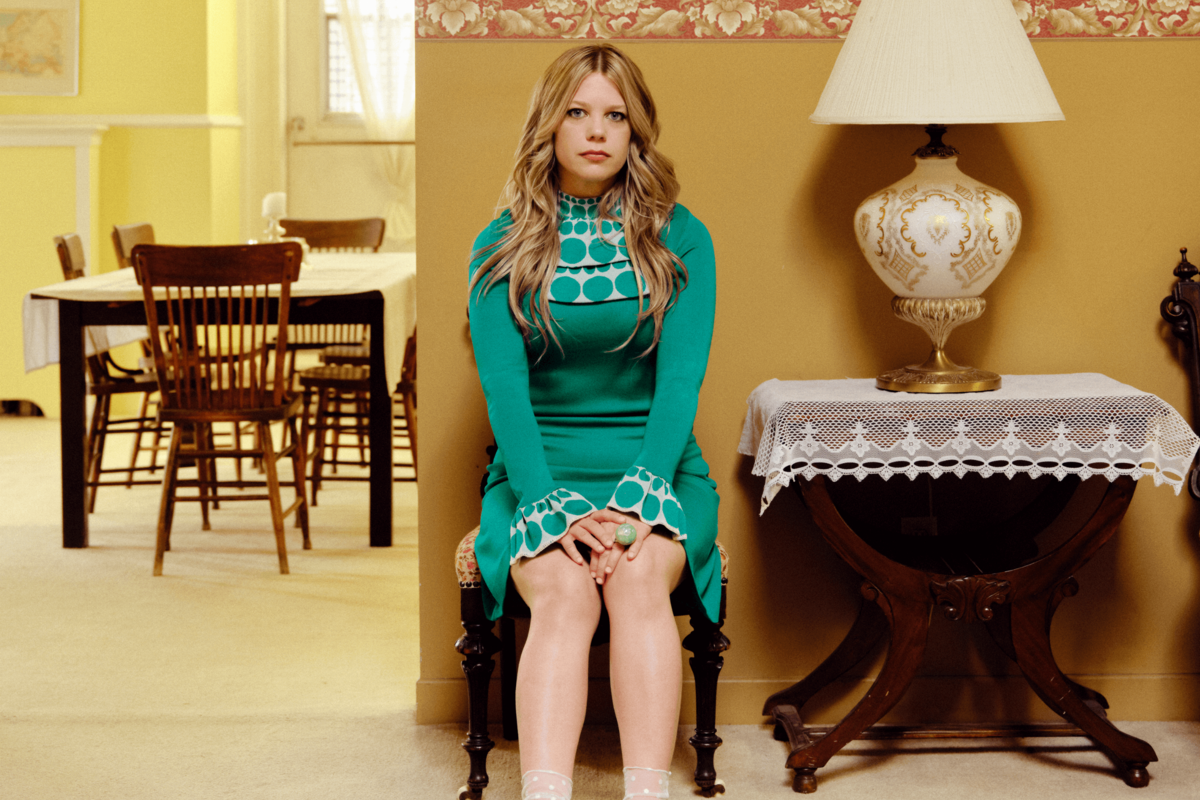
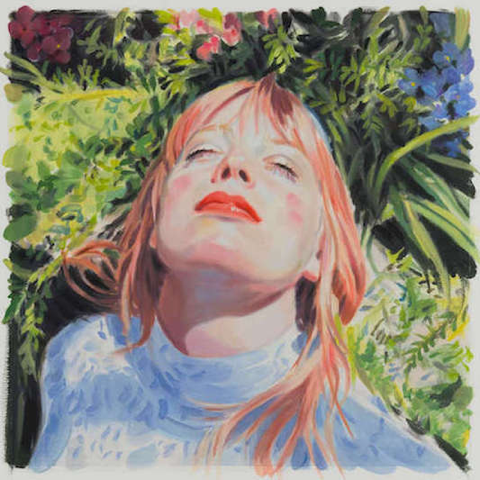
Let’s get one thing out of the way: Basia Bulat doesn’t live in a château. The property at the heart of the songwriter’s new studio album is at once her apartment, her jam-space—and the inside of her head. Basia’s Palace is a place festooned with love and memory, bad wiring; it’s a paradise that comes alive in the wee hours of the night, at a time that’s suited to video games and Leonard Cohen records, when you sit in all that richness, taking in all the mess we inherit.
Basia’s Palace got its start in 2022. A new home, a new family, a pause: the singer was finally finding time to hear her own thoughts, to think about old stories, to boot up her Nintendo to play Dragon Warrior 4. It brought to mind anecdotes Bulat had heard about Cohen—how he used to do his best writing at three or four a.m., before his kids would wake up; how he’d sit and toy with his Casio’s presets. Now it was Bulat sneaking down to play RPGs or to make music on her Macbook, listening for the spirit-world at a time when the veil felt thinnest. The songs she was creating didn’t feel like anything she had recorded before—MIDI soundscapes that floated and gleamed, like hidden levels above (or below) the action.
The album that emerged from this—that started in dawn-kissed synth instrumentals, lyrics scribbled down in a Hayao Miyazaki notebook—is the softest and most questing of her career. Basia’s Palace is like a time-travel score, with Bulat as Chrono Trigger’s intrepid adventurer, going back into the past to shape the events of the future. After years of releasing records where live performance came first—culminating in 2022’s The Garden, which reimagined some of Bulat’s best-loved songs with help from a string quartet—the singer-songwriter wanted to express herself in a completely different way, composing with MIDI instead of piano/guitar. Reuniting with co-producer Mark Lawson, she found herself moving through a dreamworld of whispers, synths and early Eurovision tunes, Cohen’s I’m Your Man and Air’s Moon Safari, her great uncle’s gauzy Maryla Rodowicz LPs.
The result feels like an album that was concealed behind the backings of Bulat’s childhood photos—tracks like “My Angel,” where mystery and romance mingle over squelchy synths drum-machine, with a soaring string arrangement by Drew Jurecka (Dua Lipa, Alvvays), or “Laughter”— which was mixed, like all tracks on the record, by legendary engineer Tucker Martine (Beth Orton, Neko Case, The National)— that takes a quiet domestic scene and sees it build to a deafening sublime. “Disco Polo” is a track Bulat’s been threatening to make forever—a folk-song named for a genre of trashy Polish dance music that was beloved of her father—whereas “Baby,” which took years to finish, makes an elegant dance number out of an oh-too-familiar predicament: “Baby, baby, baby,” Basia sings, “I don’t learn!” At some moments there are shades of Serge Gainsbourg and Brigitte Bardot’s “Bonnie and Clyde” or Charles Aznavour’s “Emmenez-Moi”; at others it’s the silicon-shiny sweetness of The Cardigans’ “Lovefool” or Air’s Moon Safari.
Throughout, Bulat pays tribute to the magic of creation and the spellwork of performance. This is the truest location of Basia’s Palace: not just the Mile End jam-space where she recorded much of this LP; not just her home, her family, or her searching spirit. But those moments themselves—the ones that arrive on-stage, or in the instant of creation—when a song leaves Basia’s heart and leaps onto her lips.