Interview Blind Channel about new album ‘Painstream’: With this album, the Finnish DNA can be found in its heaviness.
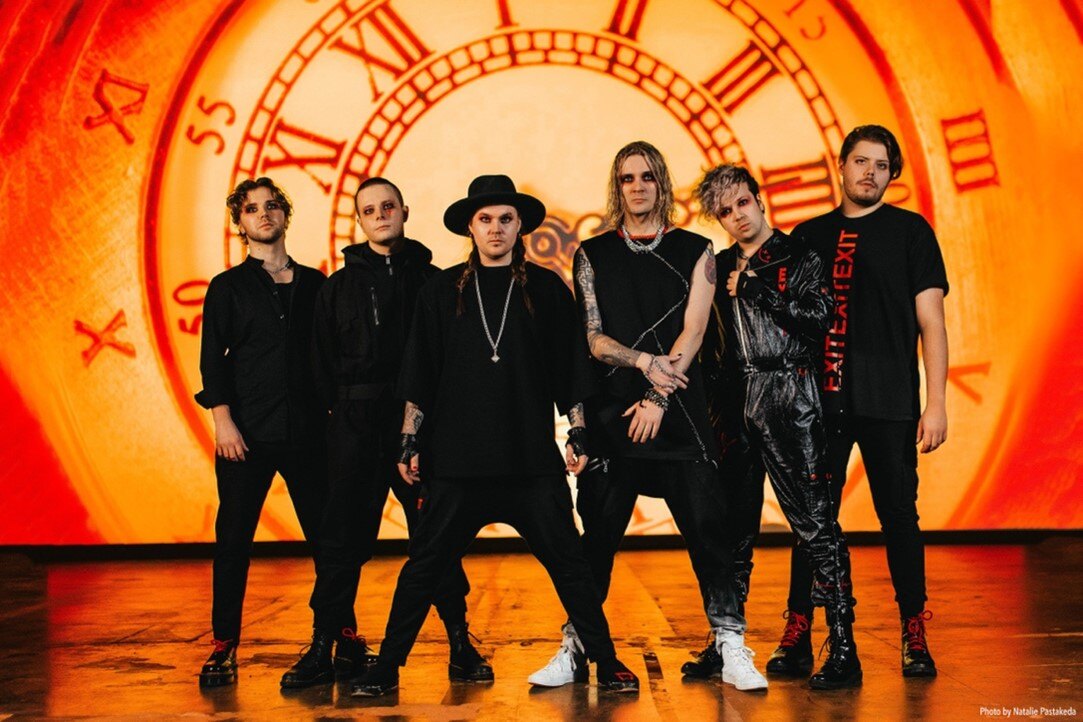
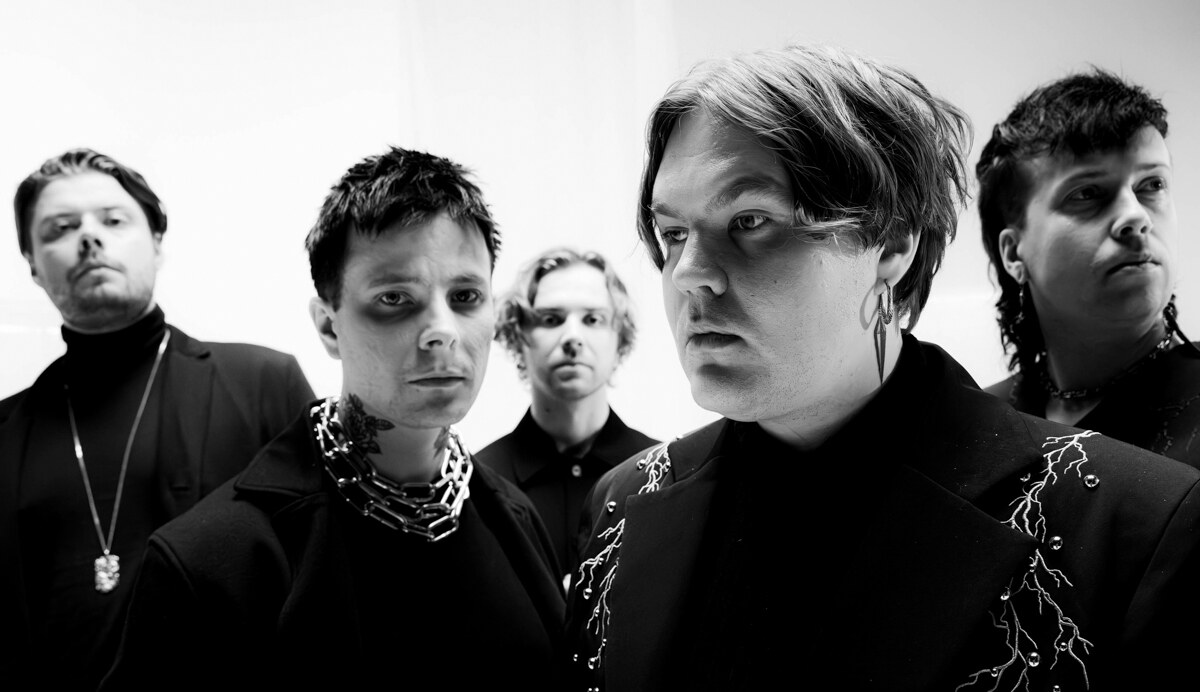
Blind Channel are back with their 6th studio album “Painstream”. Five guys from Finland. Pissed-off yet philosophic. Firm but explosive. More experienced than before, hungrier than ever.
What began as a fun combination of words “Pain” and “Mainstream” soon began to sound a lot deeper. Bad things are happening all around the world, and at times it feels like being stuck in an endless stream of pain. Then again, pain is what we living things have in common - a way to know we as humans are still alive. And if that’s true, could pain be something that unites rather than divides humanity? A big central idea on the album is the fragility and ephemerality of human beings: Humans are so small compared to mountains and oceans. That’s what made Blind Channel aim for huge soundscapes: Could the production sound so massive that it would make us seem small?
The creative process of the album was a soul search and a journey deep into meaning and remembrance of the band’s essence. “To remember ourselves we needed to forget what other bands were doing and what was expected from us by our team and our fans. And to do that we just began writing, and kept writing. Dozens and dozens of demos, until we found the elements that resonated within every member.”
Out of this process came 12 new tracks of “Painstream”, where the band processed and communicated emotions. On the forefront: Pain. All kinds of pain. And they are approaching the theme from individual, societal and universal levels. “We always write from personal experience, so the stories in the songs are something the five of us can relate to. Hopefully, the listeners can relate to them as well.”
Also, the pain of growth. As a band and as human beings. “For so long we had this near-nihilistic approach in our lyrics, where nothing mattered since we’re all gonna die anyway. It took us many trips around the sun to realize that actually, there are a lot of things that matter to us. A lot of things we wanna fight for. And because of that, for the first time in a really long time there’s a hopeful tone hidden thoughout the album.”
“Painstream” is about unity, healing, and rising fighting spirit: “Diana” is about humans’ twisted need to push each other down, despite the fact that humans are such fragile beings, and we should be more gentle with one another. Writing a riff-based song felt wonderful, like we were returning to our roots. “No Encores in a Swan Song” is about the life that flashes before your eyes when you die. “We wondered if that was optional. Like, what if you had a bad life and you don’t want to see that shit again?” Musically the song is driven by our hunger to get back on the live-stages. We can’t wait to connect with our fans through songs like this. “Stars We See” spawned from an existential crisis, but landed on a hopeful note. “What if the fact that us humans have such finite lives is what actually makes them meaningful? We wanted the production to sound like a night sky filled with stars and we think we nailed it.”
“Into The Void” was inspired by the Fermi Paradox and the wow! signal. If Earth is the only place in the universe where life exists, we’re not doing a very good job sustaining it. Aaron from Of Mice and Men jumped aboard and made sure moshpits will suck people in like black holes. The track “Messiah” song is a story about someone struggling with fear of God, love of God, hate of God and so on. We’re not big on religion but we do find faith a fascinating concept. We wanted it to echo like a grand cathedral that might collapse on you at any moment. With “Painstream”, Blind Channel present their most mature and reflected album to date: “We don’t think we’ve ever made songs that sound so much like the five of us. Everyone’s contribution can be heard and felt. That’s what being in a band is about, one soul in five bodies. We made an album that needed all of us and our only guidelines were the songs that spoke to each of us. And that’s what the album sounds like: the five of us. We couldn’t have done it any other way. “2
Frontview Magazine previewed the new album with Niko Moilanen a few weeks before its release.
Could you tell us a bit more about the central theme of your new album, Painstream?
The album is an exploration of pain as an individual yet universal sensation. With this album we want to ask the question; could the pain that we see tearing the world apart become something that unites us?
You're a Finnish band. Does the album carry a distinctly Finnish DNA, and if so, where can listeners hear or feel that influence?
With this album, the Finnish DNA can be found in its heaviness. Finland has the most metal bands per capita in the world and we have a magnificent metal heritage. Behind closed doors we’ve always seen ourselves as a metal band, but it feels like only now we’re confident enough to be that metal band out there in the open as well.
"Messiah" sounds very spiritual and religious. Do you think people are craving that again – a moment of reflection, or perhaps a return to simplicity?
A moment of reflection is something the world and everyone in it should have from time to time. We had so many such moments while writing this album. While we’re not the most religious band, we do find faith a fascinating concept, mainly because it’s the opposite of facts and knowledge. It’s beautiful to have something to believe in, even if it’s just music, kindness or a better tomorrow.
"Youthanasia" and "Into the Void" sound rather catastrophic, especially when it comes to younger generations. But is there hope to be found on the album as well?
There’s a lot of hope, even if it’s sometimes hidden under layers of pain. And it’s not only passive hope, like a dream or a wish, but active: empowerment, a want to act, a will to fight. For us, doing the right thing often begins with naming what’s wrong and that’s what we wanted to do with these songs.
"Revolution" opens with the sound of church bells. Why did you choose to include them? Were you aiming to create a sense of calm or something else?
For us, sound design in a song is an equivalent of worldbuilding in a novel. It’s like painting a scene, and this time with the rain and the bells we were aiming to create a background of doom for an otherwise rebellious and uplifting song. Our DJ/Percissionist/Producer Alex loves bell sounds, so you can hear them in a lot of places for that reason as well.
Who or what is the scapegoat in "Scapegoat"?
Scapegoat could be anyone of us or then the listener relating to the song. It’s a story of a toxic relationship, where the other half dumps all their problems on the said scapegoat, while in reality they are the source of their own suffering. We’ve experienced and witnessed many relationships like that and hope no one has to go through such things. But if you do, we hope this song can be of little help.
"Diana" features a beautiful riff. Is that one of the highlights of your live shows as well? And by the way, who is Diana?
At least I think it is! I love how a song about human fragility can sound so powerful. I also love how the song has a conversation with our breakthrough song Dark Side. A band saying ”we don’t wanna grow up” went on a break and returned saying ”we don’t wanna die young.” At the live shows you can see that conversation happening in real time and it feels so reflective and magical to me. Diana was inspired by Princess Diana. It is also a latin word (and a Roman name) for a goddess, and fit beautifully for our purposes to explore this strange human need to push each other down instead of lifting each other up.
"Ache" ends with the sound of Morse code. Is it meant to be a distress signal?
It’s more of an easter egg to be honest. We’ve done it on our previous albums as well, but I’m not sure if the listeners have noticed them. There are always hints and puzzles that point at where we might be heading next, musically and thematically. The signal you hear at the end is one of those puzzles to be solved.
How did the collaboration with Aaron Pailey come about?
We met Aaron a couple of times while playing the same festivals in the US. He’s so talented and the nicest guy and we had some deep talks about music and performing live and so on. Once we wrote the first version of Into The Void, we felt that a song with such an enormous theme needs another voice, so we sent it to Aaron. He loved the song and jumped in on it and it was such a pleasure to finish the song together. It’s a big deal for us to work with such pioneers of the scene.
Painstream is available as CD Digipak, Limited CD Digipak edition with 1 out of 500 unique Polaroids taken by the band (“The 500 Frames Edition”), black LP and digital
Info
https://www.blindchannelofficial.com/
Watch video
Embedded content from a social media network that wants to write or read cookies (YouTube). You have not given consent for this.
Embedded content from a social media network that wants to write or read cookies (Spotify). You have not given consent for this.
Read more
All articles →