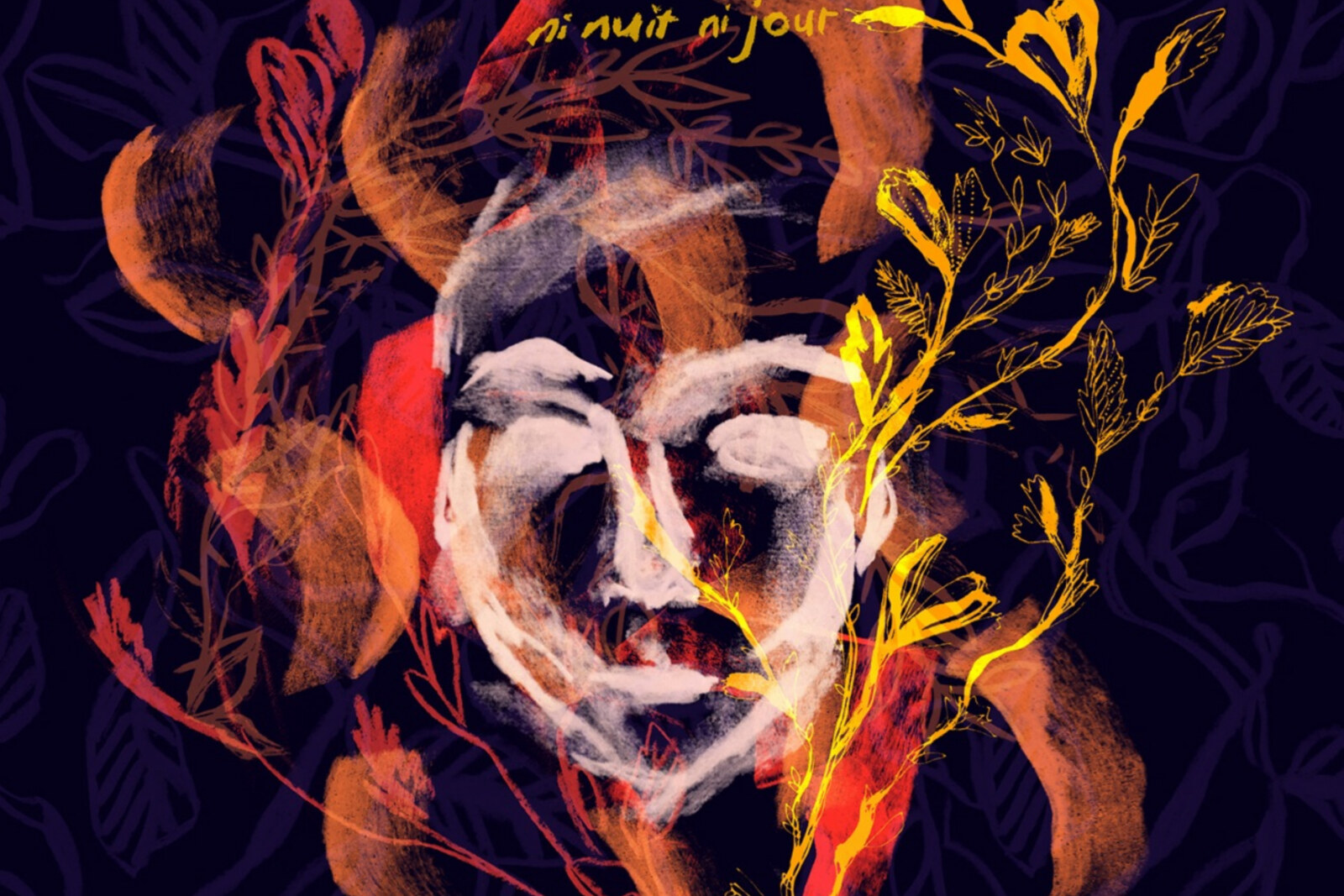
La Cozna releases Ni Nuit Ni Jour
The experimental folk quartet La Cozna’s first album Ni Nuit Ni Jour (meaning “Neither Night nor Day”) unveils a rare sound audacity between contemporary music and traditional songs from the French folk repertoire.
Where does the success of a good recipe come from? According to their first album Ni Nuit Ni Jour, the success of La Cozna (meaning the kitchen in Savoyard, a French dialect from the Alps) comes from its experimental roots, its complex timbres, its improvised sorties, the radical nature of its texts, textures, and forms, all of which come together in the kitchen of the group since its creation in Grenoble in 2021, following the impulse of Clémentine Ristord(who plays the bass clarinet, the saxophones, and the boîte à bourdon (a sort of hurdy-gurdy). At her side, Pierre-Antoine Despatures (who plays the double bass and percussion), Clémence Baillot d’Estivaux (singing, cello) and Benjamin Garson (guitars) stretch the boundaries of their instruments to hand-knead the plastic properties of sound. In the heart of their sound exploration lab, La Cozna spills over the musical movement to invite for dinner spectral conceptions and electroacoustic practices, and thus coin its very own language. Clothes pegs, knitting needles, coffee stirrers, tinfoil, drumsticks made of horn, bone or bamboo... All of these are no longer utensils but rather bold attempts by the quartet to blur the music, following their strong taste for prepared instruments and methods of contemporary music. Although the members of the quartet have a background in practices of improvisation (jazz or classical music), it is traditional, folk music that brings them together.
Ni Nuit Ni Jour has been inspired by groups such as La Nòvia, Pagans or Hart Brut, but La Cozna also took hold of traditional French songs collected in the XXth century. Whispered on in the intimacy of kitchen corners, these women’s songs tell stories of love, violence and freedom, trumping domination with humour, drama and poetry. In Ni Nuit Ni Jour, textual ambiguity flirts with a feverish tone, loaded with desire and darkness. La Cozna’s goal is to create today a repertoire of texts with a political agenda in relation to contemporary feminist fights, and to make us hear marginalised rural voices, brought back to life by the celestial voice of Clémence Baillot d’Estivaux. In order to further the continuum of struggles as well as that of sound, La Cozna’s orchestration also relies on a boîte à bourdon fashioned by the experimental luthier Léo Maurel from a motorised hurdy-gurdy. The terroir texture of the traditional instrument is transfigured by the highly creative use of the studio. At the crossroads of worlds and languages with Ni Nuit Ni Jour, the experimental folk quartet introduces a bold first album and uses old pots on a high heat to cook the future of music. La Cozna is not about the worship of ashes but it is all about the passing down of fire!
Read more
All articles →